
NEWS & INSIGHTS
The latest industry insights & news from CCSI, Specialists in Establishing Contact Centers in Mexico for Debt Collection, Customer Service, Sales, BPO and more.

NEWS & INSIGHTS
The latest industry insights & news from CCSI, Specialists in Establishing Contact Centers in Mexico for Debt Collection, Customer Service, Sales, BPO and more.
As part of an effective Compliance Management System, debt collection organizations should make sure that agents understand the rules governing consumer communications and recognize practices that may be considered unfair, deceptive, abusive, harassing, or misleading.
For organizations providing debt collection services, compliance should be incorporated into everyday operations rather than treated as a separate administrative responsibility.
The Consumer Financial Protection Bureau (CFPB) maintains examination procedures addressing unfair, deceptive, or abusive acts or practices, commonly referred to as UDAAP. Debt collection organizations may also be subject to the Fair Debt Collection Practices Act (FDCPA), Regulation F, and additional federal and state requirements depending on their activities.
A strong compliance culture begins with clear policies, but it depends on agents and managers consistently applying those policies during real consumer interactions.
UDAAP stands for unfair, deceptive, or abusive acts or practices. These standards are part of federal consumer financial protection law and can apply to the conduct of entities subject to the CFPB's authority.
The CFPB's debt collection examination procedures also recognize that conduct prohibited by the FDCPA may, depending on the facts and circumstances, raise separate UDAAP concerns.
For debt collectors covered by the FDCPA, Regulation F establishes federal requirements covering areas such as consumer communications, harassment or abuse, false or misleading representations, unfair practices, validation information, disputes, time-barred debt, and record retention.
Whether a particular practice violates UDAAP, the FDCPA, Regulation F, or another law depends on the specific facts and circumstances. However, the following are examples of practices that collection organizations should carefully address through policies, training, technology, and quality assurance:
Attempting to collect unauthorized amounts.
Do not collect interest, fees, charges, or other amounts unless they are authorized by the agreement creating the debt or otherwise permitted by applicable law.
Improperly processing or crediting consumer payments.
Payment systems and agent procedures should accurately apply payments and avoid creating improper fees, balances, or account information.
Taking or threatening action without the legal right to do so.
Collectors should not threaten repossession, garnishment, lawsuits, or other actions that cannot legally be taken or that the organization does not actually intend to pursue.
Improperly disclosing a consumer's debt to third parties.
Debt collection communications can involve significant privacy restrictions. Organizations should have procedures designed to prevent unauthorized disclosure of debt information to employers, coworkers, family members, or other third parties.
Misrepresenting the character, amount, or legal status of a debt.
Agents should rely on accurate account information and avoid statements that could mislead consumers about how much they owe or the status of the account.
Falsely implying that a collector is an attorney.
A communication should not state or imply that it comes from an attorney when that representation is not true.
Misrepresenting government affiliation.
Collectors should not suggest that a collection agency, communication, or document is authorized by or affiliated with a government agency when it is not.
Making misleading statements about credit reporting.
Organizations should accurately represent whether information will be furnished to a consumer reporting agency and should not threaten actions they do not intend to take.
Making settlement promises that are inaccurate or misleading.
Settlement terms, payment arrangements, account balances, and representations regarding forgiveness or resolution of a debt should accurately reflect what the organization is authorized and intends to provide.
Threatening lawsuits, arrest, prosecution, or other unauthorized actions.
Collectors should never threaten legal or other consequences that cannot lawfully occur or that the collector or creditor does not actually intend to pursue.
The safest collection strategy is not based on aggressive language. It is based on accurate information, clear communication, documented procedures, trained agents, and consistent compliance oversight.
Compliance training should be an ongoing process rather than a one-time event during onboarding.
Agents should understand how regulatory requirements apply to actual conversations with consumers, including situations involving disputes, third-party communications, requests to stop or limit communications, account information, settlement discussions, legal threats, and escalation procedures.
Training can include:
Experienced call center agents should also receive periodic coaching as procedures, technology, client requirements, and regulatory expectations evolve.
Training alone cannot confirm that policies are being followed consistently. Organizations should monitor actual consumer interactions and review operational data to identify potential compliance risks.
Call monitoring, quality assurance, complaint analysis, account reviews, compliance testing, and management reporting can help identify areas where procedures or employee training need improvement.
When a potential compliance issue is identified, organizations should document what occurred, determine the cause, and take appropriate corrective action.
Depending on the circumstances, this may involve additional training, changes to scripts or procedures, technology updates, increased monitoring, disciplinary action, or other remediation.
An effective Compliance Management System should help an organization identify problems internally, correct them, and reduce the likelihood that the same problem will occur again.
Organizations can review the CFPB's current UDAAP examination procedures when developing or reviewing their compliance programs.
Establishing a collection operation outside the United States does not eliminate the compliance requirements associated with collecting U.S. consumer accounts.
A nearshore collection team should therefore operate within the same policies, training requirements, quality standards, technology controls, and management oversight established for the client's broader collection program.
At Call Center Services International (CCSI), nearshore debt collection operations in Mexico can be integrated with U.S.-based client management, processes, technology, training, and performance standards.
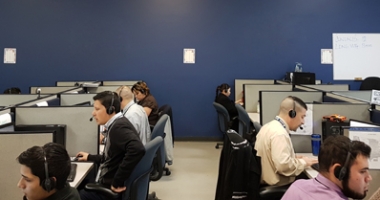
Access to trained bilingual call center agents can provide additional collection capacity while allowing compliance and management teams to remain closely connected to day-to-day operations.
Nearshoring should provide workforce and operating advantages without creating distance between the collection floor and the client's compliance standards.
Learn more about CCSI's debt collection solutions and how nearshore teams in Mexico can support scalable collection operations while remaining integrated with client compliance and performance requirements.
This article provides general information about debt collection compliance and UDAAP and is not intended as legal advice. Whether particular conduct violates federal or state law depends on the specific facts and circumstances. Organizations should consult qualified legal and compliance professionals regarding requirements applicable to their activities.



The latest industry insights & news from CCSI, Specialists in Establishing Contact Centers in Mexico for Debt Collection, Customer Service, Sales, BPO and more.