
NEWS & INSIGHTS
The latest industry insights & news from CCSI, Specialists in Establishing Contact Centers in Mexico for Debt Collection, Customer Service, Sales, BPO and more.

NEWS & INSIGHTS
The latest industry insights & news from CCSI, Specialists in Establishing Contact Centers in Mexico for Debt Collection, Customer Service, Sales, BPO and more.
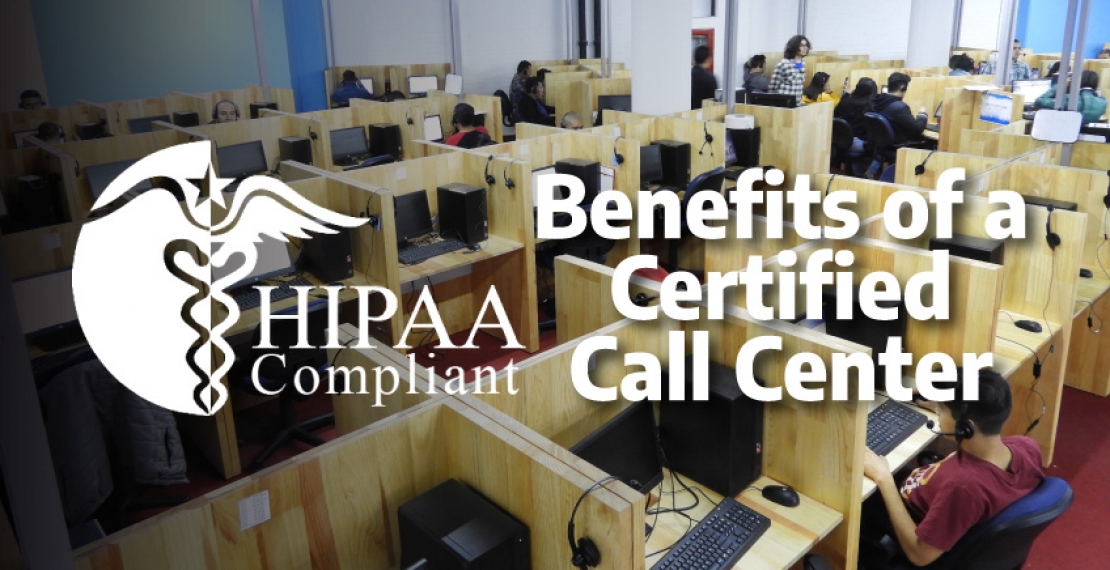
What does it mean for a Call Center to be HIPAA compliant, and why is it important when supporting healthcare organizations? Understanding HIPAA requirements can help companies evaluate how a Contact Center protects patient information and supports healthcare-related customer service operations.
HIPAA compliance is an important consideration for companies providing Contact Center services for the healthcare industry. When a Contact Center handles Protected Health Information (PHI) on behalf of a healthcare organization, appropriate privacy and security safeguards must be in place according to the role and responsibilities of the organizations involved.
It is important to clarify that there is no official government-issued “HIPAA Certification.” The U.S. Department of Health and Human Services (HHS) does not certify organizations or products as HIPAA compliant. Instead, organizations subject to HIPAA are responsible for meeting the applicable requirements of the HIPAA Privacy, Security, and Breach Notification Rules.
HIPAA violations can create significant legal, financial, operational, and reputational consequences. For healthcare organizations outsourcing patient communications, evaluating a Contact Center's privacy practices, security controls, employee training, and contractual responsibilities should therefore be part of the vendor-selection process.
Working with a Contact Center that understands HIPAA requirements can help healthcare organizations protect patient information while maintaining efficient customer and patient communication.
A properly structured HIPAA-compliant operation can help:
Organizations evaluating a HIPAA-compliant Contact Center should review the administrative, physical, and technical safeguards used to protect healthcare information, as well as the procedures employees follow when communicating with patients.
Electronic Protected Health Information should be protected through appropriate technical safeguards based on the organization's systems, risks, and responsibilities. Depending on the environment, these measures may include encryption, access controls, authentication, secure networks, monitoring, and other protections designed to prevent unauthorized access to sensitive information.
Healthcare organizations should evaluate how a Contact Center protects information both when it is transmitted and when it is accessed within the operation.
Appointment scheduling can involve sensitive patient information. Agents should follow established procedures designed to verify identities where appropriate, limit unnecessary disclosure of information, and protect the confidentiality of patient communications.
The same privacy principles apply whether an interaction involves appointment scheduling, transportation coordination, insurance information, billing inquiries, or other healthcare support services.
Text messaging, email, chat, and other digital communication channels should be evaluated according to the type of information being exchanged and the safeguards required to protect PHI.
Organizations should use appropriate technologies, access controls, policies, and procedures to reduce the risk of unauthorized disclosure when sensitive healthcare information is communicated electronically.
Employees who handle healthcare information need training appropriate to their roles and responsibilities. Training should help agents understand privacy requirements, security procedures, permitted uses and disclosures of information, and how to respond when a potential privacy or security issue occurs.
Ongoing training and Quality Assurance can help reinforce these procedures and maintain consistent standards across the Contact Center workforce.
When a Contact Center performs services for a HIPAA-covered organization and qualifies as a business associate, the relationship generally requires an appropriate Business Associate Agreement (BAA) defining responsibilities for the use and protection of PHI.
A private certificate or training program does not replace these contractual and regulatory obligations.
Call Center Services International (CCSI) helps U.S. organizations establish and manage Nearshore Healthcare Contact Center operations in Mexico. CCSI combines professional bilingual and bicultural agents with recruiting, training, Workforce Management, Quality Assurance, technology infrastructure, and operational support.
CCSI supports healthcare processes including patient enrollment, appointment scheduling, transportation coordination, billing support, medical device technical support, patient communications, and other customer service functions while integrating with the client's existing systems and workflows.
These operations are supported by CCSI's cybersecurity and compliance framework. CCSI currently identifies its operations as HIPAA compliant, alongside SOC 2, PCI DSS, and ISO/IEC 27001 security and compliance standards.
Historical note: First published in September 2021, this article has been reviewed and updated while preserving its original focus on the importance of HIPAA compliance in healthcare Contact Center operations. Terminology referring to “HIPAA Certification” has been updated because HHS does not issue or recognize an official HIPAA certification. References to security safeguards, electronic communications, employee training, and healthcare operations have also been clarified to better reflect HIPAA requirements.
Originally published: September 2, 2021
Last reviewed and updated: July 26, 2026



The latest industry insights & news from CCSI, Specialists in Establishing Contact Centers in Mexico for Debt Collection, Customer Service, Sales, BPO and more.