

NEWS & INSIGHTS
The latest industry insights & news from CCSI, Specialists in Establishing Contact Centers in Mexico for Debt Collection, Customer Service, Sales, BPO and more.

NEWS & INSIGHTS
The latest industry insights & news from CCSI, Specialists in Establishing Contact Centers in Mexico for Debt Collection, Customer Service, Sales, BPO and more.
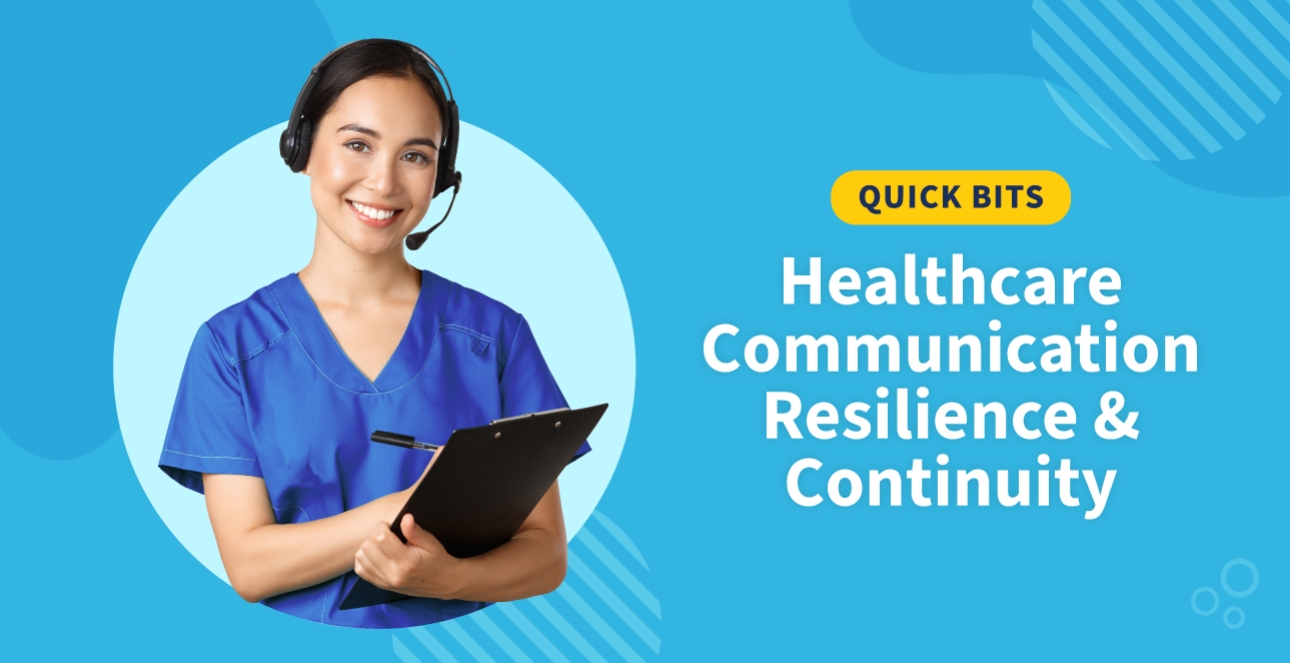
As healthcare organizations become increasingly dependent on digital technologies, maintaining communication during cyberattacks, system outages, or other disruptions is critical to operational continuity. The impact extends beyond technology, affecting patient care, clinical coordination, administrative operations, and the overall patient experience. These growing challenges underscore the importance of communication resilience, a topic examined in CCSI's whitepaper: Communication Resilience for the Healthcare Industry.
Technology disruptions can create challenges across multiple areas of an organization. Without a defined strategy, teams are often forced to operate reactively at a time when speed and accuracy are essential.
Common challenges include:
For this reason, communication continuity should be an integral part of business continuity, disaster recovery, and cybersecurity preparedness plans.
As part of a comprehensive resilience strategy, CCSI helps organizations establish Nearshore support models, escalation procedures, and operational plans that enable communication continuity when normal operations are disrupted.
Support can include communication management, escalation coordination, operational support, and recovery efforts, depending on the situation.
Technology alone does not guarantee continuity. The most resilient organizations also rely on well-defined processes, ongoing training, and structured response plans.
Common characteristics include:
This approach is supported by CCSI’s experience, relevant cybersecurity certifications and compliance standards, multi-site operations in Mexico, and trained bilingual teams prepared to respond to unexpected disruptions.
Operational disruptions and critical incidents typically unfold across three key phases: before, during, and after an event. Each phase presents distinct risks, priorities, and challenges, making it essential to have a strategy that supports preparedness, enables effective response, and facilitates an organized recovery to maintain business continuity.
Communication resilience is a critical component of operational continuity in healthcare. In CCSI’s whitepaper, Communication Resilience for the Healthcare Industry, you will find practical recommendations and strategies to anticipate risks, respond effectively to disruptions, and strengthen your organization's recovery capabilities.
For healthcare organizations, these strategies can complement broader patient support operations by helping teams maintain communication, service consistency, and access to critical information when normal operating conditions are interrupted.
Download the complete whitepaper to explore practical strategies for strengthening communication resilience and preparing your organization for unexpected operational disruptions.
Learn how to reinforce continuity across critical operations and improve preparedness for unexpected events.
Call Center Services International (CCSI) helps U.S. healthcare organizations establish and manage Nearshore Healthcare Customer Support operations in Mexico, combining professional bilingual and bicultural talent with recruiting, training, technology infrastructure, Workforce Management, Quality Assurance, and operational support.
CCSI supports operational resilience through Contact Center facilities in Tijuana, Mexico City, and Guadalajara, together with flexible Work-From-Home capabilities that can provide organizations with additional workforce and geographic flexibility as part of a broader business continuity strategy.
Healthcare and other security-sensitive operations are supported by CCSI's cybersecurity and compliance framework, which includes SOC 2, ISO/IEC 27001, PCI DSS, and HIPAA compliance, along with security monitoring, operational controls, risk-management practices, and continuity planning designed to support reliable Nearshore operations.



The latest industry insights & news from CCSI, Specialists in Establishing Contact Centers in Mexico for Debt Collection, Customer Service, Sales, BPO and more.