
NEWS & INSIGHTS
The latest industry insights & news from CCSI, Specialists in Establishing Contact Centers in Mexico for Debt Collection, Customer Service, Sales, BPO and more.

NEWS & INSIGHTS
The latest industry insights & news from CCSI, Specialists in Establishing Contact Centers in Mexico for Debt Collection, Customer Service, Sales, BPO and more.
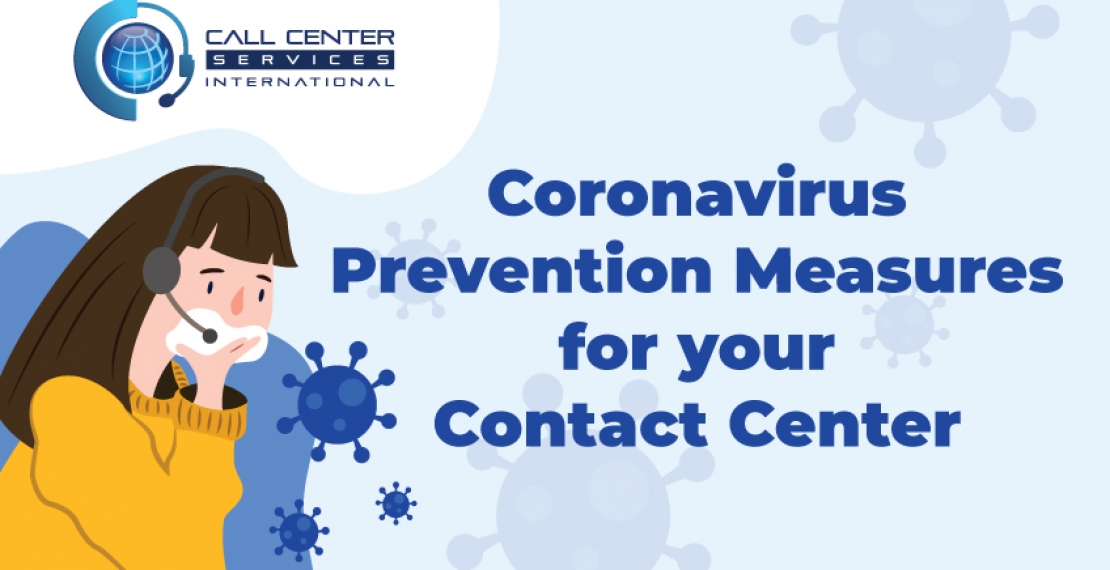
Being prepared for health risks that may affect your workforce and business operations is not always at the top of the priority list. The COVID-19 pandemic demonstrated how quickly contact centers can be affected by widespread illness and highlighted the importance of combining workplace health preparedness with a strong business continuity strategy.
Your contact center is an important part of your business, especially when customers depend on remote service and support during periods of disruption. Maintaining customer service and customer experience becomes particularly challenging when the same event affecting your customers may also affect your employees.
The COVID-19 pandemic reinforced an important lesson for contact center operators: workforce health, operational resilience, technology, staffing, and business continuity planning should be considered together rather than treated as separate issues.
The original version of this article focused specifically on COVID-19 prevention. Many of those operational principles remain useful today as part of broader workplace preparedness for respiratory illnesses, although health guidance has evolved significantly since 2020.
During any health-related event, employees may encounter conflicting information through social media, news reports, and informal sources. Employers should rely on recognized public health and workplace safety authorities and communicate verified information clearly to employees.
Providing consistent information can help reduce confusion and ensure that supervisors, managers, and agents understand the workplace procedures being implemented. For current guidance, employers should consult sources such as the Centers for Disease Control and Prevention (CDC), the Occupational Safety and Health Administration (OSHA), and applicable local health authorities.
Organizations should develop policies that support employees who are sick and clearly communicate the procedures for reporting illness, requesting leave, and returning to work.
Flexible leave and remote-work policies, when operationally appropriate, can help reduce unnecessary workplace exposure while allowing organizations to maintain essential functions.
Contact centers typically include shared spaces and frequently touched equipment. Employers can promote good hand and respiratory hygiene while maintaining appropriate cleaning practices for workstations, keyboards, mice, headsets, biometric devices, common areas, and other high-touch surfaces.
Employees should have access to the appropriate cleaning and hygiene supplies needed to follow workplace procedures, while cleaning and maintenance teams should have clearly defined responsibilities for common areas and shared equipment.
The experience of COVID-19 also increased awareness of the importance of indoor air quality. Organizations should consider ventilation and air filtration as part of their broader workplace health strategy and evaluate their facilities according to current building, occupational health, and public health guidance.
Additional measures such as face coverings, physical distancing, testing, or temporary changes to workplace activities may also be appropriate depending on current conditions, employee risk, local requirements, and guidance from public health authorities.
Health preparedness is only one part of the challenge. Contact centers should also plan for how essential customer operations will continue when workforce availability, facilities, technology, transportation, or other business resources are disrupted.
Organizations should identify which functions are critical to maintaining operations and determine whether additional employees can be trained to perform essential tasks when key personnel are unavailable.
Cross-training can reduce dependence on individual employees and provide greater flexibility during unexpected increases in absenteeism or other operational disruptions.
The pandemic demonstrated how valuable remote-work capabilities can be for contact center business continuity. Organizations should determine which functions can operate remotely and establish the processes, technology, security controls, supervision, performance measurement, and communication procedures required to support those teams.
A secure Work-From-Home Contact Center model can provide additional workforce flexibility and operational redundancy when employees cannot access a traditional facility.
Remote operations should also be evaluated from an information-security perspective. Access controls, secure connectivity, endpoint protection, monitoring, and clearly documented procedures are important elements of a resilient remote operation. Learn more about CCSI's approach to cybersecurity and compliance.
Organizations with operations across multiple locations may have additional options for redistributing workloads when one facility or workforce market is affected by a localized disruption.
A multi-location strategy can provide greater operational flexibility when combined with appropriate workforce planning, technology, communications, and client-approved business continuity procedures.
CCSI's contact center facilities in Mexico and remote workforce capabilities provide different operating environments that can be incorporated into a broader redundancy and continuity strategy.
One of the most important lessons from the COVID-19 pandemic was that organizations should not wait for a crisis to begin planning. Business continuity should consider workforce availability, employee health, facilities, technology, information security, communications, leadership responsibilities, and customer service requirements before a disruption occurs.
Contact center leaders can periodically review their plans, identify critical functions, cross-train employees, evaluate remote-work capabilities, test communications procedures, and determine how workloads could be redistributed if normal operations are interrupted.
Organizations should also remember that workplace health recommendations change as new information becomes available. Current guidance from public health authorities should always take precedence over recommendations published during the early stages of the COVID-19 pandemic.
Call Center Services International (CCSI) helps U.S. organizations establish and manage resilient nearshore contact center operations in Mexico. CCSI combines professional bilingual and bicultural agents with recruiting, Human Resources, continuous training, Workforce Management, technology infrastructure, operational support, and professional contact center facilities.
CCSI also provides a secure Work-From-Home Contact Center model designed to add workforce flexibility and business continuity to traditional brick-and-mortar operations. Remote and on-site environments are supported by operational controls, performance monitoring, and a comprehensive cybersecurity and compliance framework.
By combining multiple operating locations, remote workforce capabilities, professional management, and nearshore infrastructure, CCSI helps organizations develop scalable contact center operations designed to maintain customer service through changing business conditions.
Historical note: First published in March 2020 during the early stages of the COVID-19 pandemic, this article has been reviewed and updated while preserving its original focus on workforce protection, operational preparedness, remote work, cross-training, and multi-location planning. Health and workplace guidance has evolved significantly since the original publication, and current recommendations from public health and workplace safety authorities should always take precedence.
Originally published: March 18, 2020
Last reviewed and updated: July 25, 2026



The latest industry insights & news from CCSI, Specialists in Establishing Contact Centers in Mexico for Debt Collection, Customer Service, Sales, BPO and more.