

NEWS & INSIGHTS
The latest industry insights & news from CCSI, Specialists in Establishing Contact Centers in Mexico for Debt Collection, Customer Service, Sales, BPO and more.

NEWS & INSIGHTS
The latest industry insights & news from CCSI, Specialists in Establishing Contact Centers in Mexico for Debt Collection, Customer Service, Sales, BPO and more.
Outsourcing a Contact Center can provide important advantages, including access to additional workforce capacity, specialized expertise, operational flexibility, and potential cost savings. However, not every outsourcing destination or operating model offers the same benefits. Understanding the differences between Offshore and Nearshore outsourcing can help organizations select the solution that best matches their customer experience, management, workforce, and business requirements.
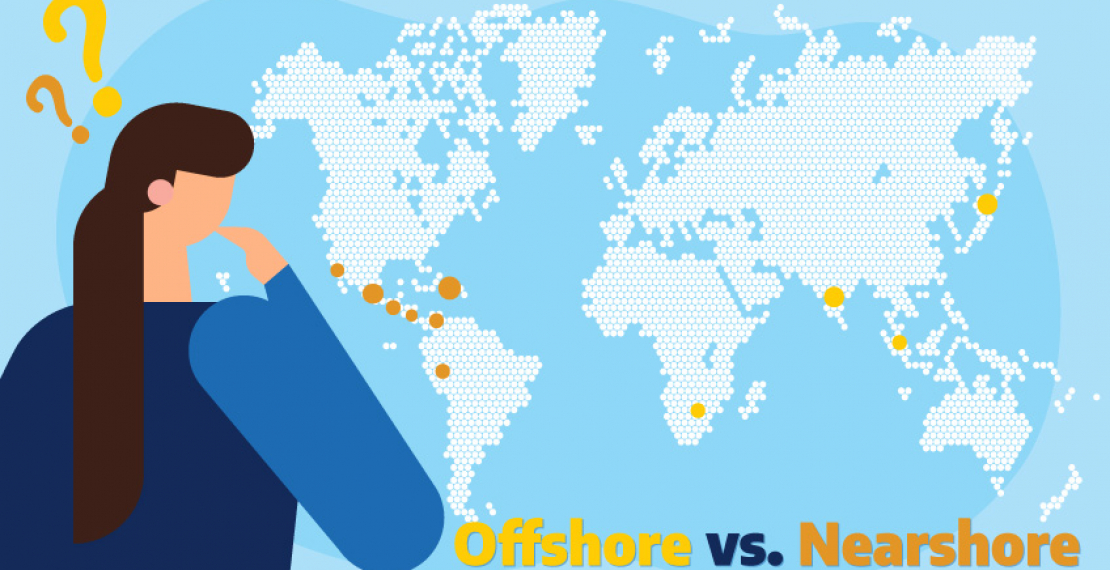
Offshore outsourcing occurs when a company contracts with a third-party provider located in a geographically distant country to perform a business function. Organizations frequently consider offshore outsourcing to access large talent pools, specialized capabilities, and lower labor costs.
Countries such as the Philippines and India have historically been among the world's most established Offshore Contact Center destinations.
Nearshore outsourcing also involves contracting with a third party to perform a business function, but the provider is located in a country geographically closer to the client's primary operation.
For U.S. companies, Nearshore destinations are generally located in Latin America or nearby regions, providing advantages that can include geographic proximity, overlapping business hours, easier travel, cultural familiarity, and access to bilingual talent.
Mexico is one of the principal Nearshore destinations for organizations serving the U.S. market, while other countries throughout Latin America and the Caribbean also support Nearshore Contact Center operations.
The best outsourcing model depends on your priorities. Cost may be the most important consideration for one operation, while another organization may place greater value on customer experience, management access, bilingual capabilities, cultural alignment, or the ability to visit and work directly with its outsourced team.
Let's compare Offshore and Nearshore Contact Center solutions using the five criteria from the original article.
Cost reduction has historically been one of the principal reasons companies select Offshore Contact Center locations. Large labor markets and lower employment costs in established outsourcing destinations can make Offshore operations considerably less expensive than operating the same workforce entirely in the United States.
However, hourly labor cost should not be evaluated by itself. Travel, management requirements, employee turnover, technology, training, service quality, implementation, and customer experience can all influence the total cost of an outsourcing relationship.
Nearshore destinations also provide labor and operating cost advantages while offering closer geographic and operational alignment with U.S. organizations.
In Mexico, for example, companies can achieve significant savings compared with U.S.-based Contact Center operations. Current CCSI Nearshore pricing reflects Mexico's labor and operating cost advantage while providing access to professional infrastructure and bilingual talent.
The appropriate comparison should therefore consider total operating value rather than simply determining which destination offers the lowest hourly labor rate.
Offshore locations are generally farther from U.S. operations, making in-person visits more time-consuming and potentially more expensive.
Significant time-zone differences can also require organizations and outsourcing partners to establish specific communication schedules so that management, training, reporting, and collaboration can take place efficiently.
These challenges can be managed successfully, but they should be considered when determining how frequently your U.S. management team needs to interact directly with the outsourced operation.
Accessibility is one of the principal advantages of Nearshore outsourcing. Geographic proximity can make it considerably easier for management teams to visit their outsourced operation, participate in training, meet employees, review performance, and work directly with local leadership.
Mexico offers particularly convenient access for U.S. companies. CCSI operates Contact Center facilities in Tijuana, Mexico City, and Guadalajara, with locations offering convenient connectivity to major U.S. cities.
Time-zone alignment also allows management teams in Mexico and the United States to communicate during overlapping business hours, supporting real-time collaboration and operational decision-making.
Established Offshore outsourcing destinations have large English-speaking workforces and extensive experience serving international customers. However, cultural familiarity with a particular customer market can vary by location, provider, agent, and program.
For customer-facing operations, organizations should evaluate language proficiency, communication style, cultural familiarity, empathy, product knowledge, and the provider's ability to train employees around the expectations of the customers they will serve.
Strong training and Quality Assurance can help outsourced teams understand brand expectations and provide consistent service regardless of location.
Cultural alignment can be an important advantage of Nearshore outsourcing for U.S. organizations, particularly when the provider serves North American customers and recruits employees who regularly interact with U.S. culture, businesses, media, and consumers.
Mexico also offers access to a large bilingual and bicultural workforce capable of supporting both English- and Spanish-speaking customers.
The ability to communicate naturally with customers, understand language nuances, and recognize cultural expectations can be particularly valuable for Customer Service and other high-interaction Contact Center functions.
Managing an Offshore operation requires strong communication, clearly defined processes, reliable reporting, effective leadership, and a well-developed training structure.
Because management teams may be separated by greater distances and time-zone differences, organizations should establish clear responsibilities and provide local leaders with the appropriate authority to make operational decisions when necessary.
A structured Workforce Management strategy can help organizations coordinate forecasting, schedules, staffing, performance, and communication across distributed teams.
Nearshore outsourcing can make direct management and collaboration more convenient because teams operate geographically closer to one another and often share similar business hours.
Managers can communicate with the Nearshore team throughout the working day, participate in training and performance reviews, and visit the Contact Center when direct involvement is beneficial.
The amount of operational control ultimately depends on the outsourcing model and provider. For example, CCSI's Turnkey Program allows clients to maintain control over processes, quality standards, training, technology, and day-to-day business operations while CCSI manages the local infrastructure and administrative framework.
Offshore outsourcing can support a wide range of business processes. The suitability of a particular operation depends more on the provider's expertise, workforce capabilities, technology, security, management model, and experience than simply on whether it is located Offshore.
Processes with clearly documented workflows and established performance requirements can often be easier to transfer to any external provider. More complex operations may require greater collaboration, training, management involvement, and industry expertise.
Nearshore outsourcing can be particularly attractive for operations that require frequent collaboration with U.S. management, ongoing process adjustments, specialized training, bilingual customer interactions, or regular site visits.
Because teams can communicate during overlapping business hours, organizations may find it easier to introduce changes, deliver training, review performance, and maintain close involvement in complex processes.
Nearshore Contact Centers in Mexico can support numerous business functions, including Customer Service, Debt Collection, Loan Servicing, sales, technical support, and other BPO services.
Determining whether Offshore or Nearshore outsourcing is the better fit requires your organization to evaluate its own operational priorities.
An Offshore solution may be appropriate when access to a large global talent market and highly competitive labor costs are principal considerations and the organization is comfortable managing the additional distance and time-zone differences.
Nearshore may be particularly attractive when an organization wants to reduce operating costs while placing greater importance on proximity, overlapping business hours, bilingual capabilities, cultural alignment, frequent collaboration, and management access.
Neither model should be selected solely because of geography. Provider quality, workforce capabilities, security, technology, employee experience, management structure, service performance, and cultural fit should also be evaluated before making a decision.
The following infographic accompanied the original 2022 article and summarizes the principal differences considered when comparing Offshore and Nearshore Contact Center outsourcing.
Call Center Services International (CCSI) helps U.S. organizations establish and manage Nearshore Contact Center operations in Mexico. CCSI combines professional bilingual and bicultural agents with recruiting, training, Workforce Management, technology infrastructure, and operational support.
CCSI operates professional Contact Center facilities in Mexico and provides Nearshore models designed to give clients close involvement in their workforce, processes, training, technology, quality standards, and performance objectives.
Mexico's proximity to the United States, overlapping time zones, bilingual workforce, professional infrastructure, and competitive operating costs make it a strong option for organizations comparing Nearshore and Offshore outsourcing strategies.
Historical note: First published in August 2022, this article has been reviewed and updated while preserving its original comparison of Offshore and Nearshore Contact Center outsourcing across five principal areas: cost, accessibility, cultural alignment, Workforce Management, and business process requirements. Pricing percentages, travel costs, travel times, and other estimates that reflected conditions at the time of publication have been updated or generalized where appropriate because these variables can change significantly by destination, provider, and operating model. The original comparison infographic has been retained.
Originally published: August 2, 2022
Last reviewed and updated: July 26, 2026



The latest industry insights & news from CCSI, Specialists in Establishing Contact Centers in Mexico for Debt Collection, Customer Service, Sales, BPO and more.