

NEWS & INSIGHTS
The latest industry insights & news from CCSI, Specialists in Establishing Contact Centers in Mexico for Debt Collection, Customer Service, Sales, BPO and more.

NEWS & INSIGHTS
The latest industry insights & news from CCSI, Specialists in Establishing Contact Centers in Mexico for Debt Collection, Customer Service, Sales, BPO and more.
The Telephone Consumer Protection Act (TCPA) is an important part of the regulatory framework governing certain telephone calls and text messages to consumers. For debt collection organizations and Contact Centers, TCPA compliance must be considered alongside consumer consent, communication preferences, technology, the Fair Debt Collection Practices Act (FDCPA), Regulation F, state requirements, and internal compliance policies.
The regulatory environment surrounding consumer communications has changed considerably since the TCPA was enacted in 1991. Mobile phones, text messaging, automated communication platforms, digital channels, Artificial Intelligence, and new Contact Center technologies have transformed how businesses communicate with consumers.
Technology may change, but organizations remain responsible for understanding which rules apply to the specific communication methods, technologies, consumers, and business processes they use.
The TCPA and the Federal Communications Commission's implementing regulations establish restrictions governing certain calls and text messages, including communications using automatic telephone dialing systems and artificial or prerecorded voices.
The applicable requirements can depend on factors such as the technology being used, the type of telephone number being contacted, the purpose of the communication, whether appropriate consent exists, whether consent has been revoked, and other circumstances.
Organizations should therefore avoid assuming that every telephone call, text message, or automated communication is treated the same way.
Compliance should be designed around the specific communication, technology, consumer relationship, and applicable regulatory requirements rather than around a single rule applied to every interaction.
For organizations operating a Debt Collection Contact Center, regulatory compliance should be integrated with technology, workforce training, Quality Assurance, information security, documentation, and operational processes.
Consent is an important consideration under the TCPA when certain automated calls, prerecorded or artificial voice communications, or text messages are involved.
Current FCC regulations also address how consumers may revoke prior express consent for covered calls and text messages.
A consumer may use reasonable methods to clearly communicate that they no longer want to receive covered calls or text messages. FCC rules identify several methods that can qualify as reasonable means of revocation, including recognized opt-out words in response to text messages and designated telephone, website, or automated opt-out mechanisms.
Applicable revocation requests must be honored within a reasonable period that does not exceed ten business days.
For Contact Center operations, this makes accurate consent and preference management an important operational responsibility. Systems and procedures should be capable of identifying applicable opt-out or revocation requests and communicating those changes to the platforms and teams responsible for future outreach.
Organizations should consult the current 47 CFR § 64.1200 and qualified legal counsel when determining the requirements applicable to their communication programs.
For debt collection organizations, TCPA compliance is only one component of a broader regulatory environment.
Debt collection communications may also be affected by the Fair Debt Collection Practices Act (FDCPA), the Consumer Financial Protection Bureau's Regulation F, applicable state laws, privacy requirements, client policies, contractual requirements, and other regulations.
Regulation F contains requirements governing communications and attempts to communicate with consumers and third parties. It also addresses electronic communication methods such as email and text messaging.
For example, debt collectors subject to Regulation F must consider requirements involving communication times and places, consumer communication preferences, certain third-party disclosures, electronic communications, opt-out procedures, and other restrictions.
The interaction between these requirements reinforces the importance of building compliance into Contact Center workflows rather than treating it as a separate activity performed after communications take place.
Current Regulation F requirements and official interpretations are available through the Consumer Financial Protection Bureau.
One of the major changes affecting consumer communication over the past several decades has been the transition from traditional landline telephones toward mobile devices.
Consumers increasingly use mobile phones for voice calls, text messages, authentication, account notifications, customer service, payments, and other interactions with businesses.
For Contact Centers, this evolution creates opportunities to communicate through channels customers use regularly, but it also requires organizations to understand the regulatory and operational requirements associated with those channels.
The objective should not simply be to increase the number of communication methods available. Organizations should create controlled communication strategies that respect customer preferences, applicable consent requirements, channel-specific regulations, security obligations, and approved business processes.
An earlier version of this article was based on research published by ACA International in 2017 examining what the organization described as the TCPA's difficulty keeping pace with changing consumer communication behavior.
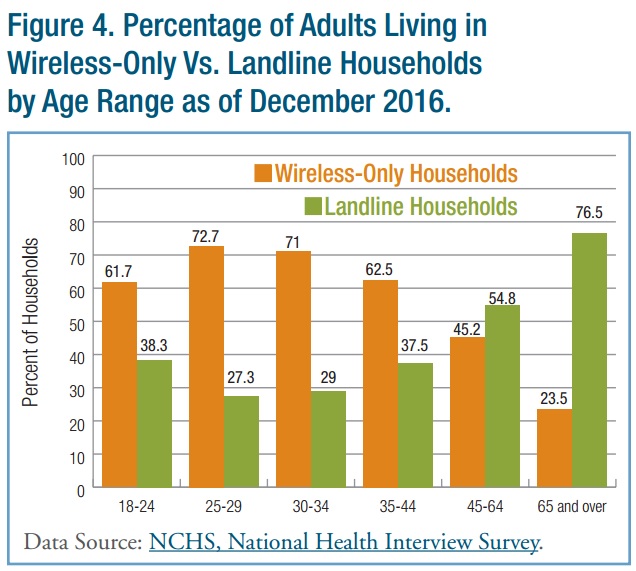
The report, How the TCPA Fails to Keep Pace with Shifting Consumer Trends, focused in part on the rapid transition from traditional landline telephone service toward wireless-only households.
The demographic data cited by ACA illustrated how dramatically telephone usage was changing at the time. According to the report, 72.7% of adults ages 25–29 lived in wireless-only households, compared with 23.5% of individuals age 65 and older.
These figures are retained as historical context and should not be interpreted as current estimates of U.S. telephone usage.
ACA International argued at the time that increasing dependence on wireless phones created practical challenges for legitimate organizations attempting to communicate with consumers while managing potential TCPA exposure.
The report highlighted concerns involving the ability to reach consumers, provide useful account information, and manage litigation and compliance risk while consumer communication habits were rapidly changing.
Those statements represented ACA International's position and the regulatory environment in 2017. They should not be interpreted as a description of current law.
Modern collection operations must balance consumer communication, recovery performance, regulatory compliance, workforce management, information security, documentation, Quality Assurance, and evolving technology.
Compliance should therefore be incorporated throughout the operation, including areas such as:
Agent training is especially important in regulated environments. Employees should understand not only what procedures they are expected to follow, but also when an interaction needs to be escalated for additional compliance or management review.
CCSI helps organizations establish Nearshore Debt Collection Contact Centers in Mexico with bilingual professionals and operational infrastructure capable of supporting first-party and third-party collection programs.
Information security is another important component of regulated Contact Center operations. Learn more about CCSI's cybersecurity certifications and compliance standards.
ACA International is a professional association serving the accounts receivable management industry. Its membership includes collection agencies, creditors, law firms, asset buyers, and companies that provide products and services to the industry.
The organization provides education, professional development, compliance resources, advocacy, industry research, events, and other member programs.
Visit the ACA International official website for current industry information and resources.
Call Center Services International (CCSI) helps U.S. organizations establish and manage Nearshore Debt Collection Contact Centers in Mexico supported by bilingual professionals, facilities, technology, recruiting, training, Quality Assurance, and operational resources.
CCSI's collection operations can support first-party and third-party programs while integrating with each client's approved technology, scripts, workflows, training standards, compliance procedures, and performance requirements.
CCSI maintains security and compliance programs including SOC 2, ISO 27001, PCI DSS, and HIPAA-related frameworks designed to support Contact Center operations handling sensitive financial and consumer information.
Historical note: This article was originally published in 2017 in connection with an ACA International report examining the TCPA and the growth of wireless-only households. The historical statistics and ACA policy positions have been preserved as context, while the article has been expanded to distinguish those findings from the current regulatory environment and modern Debt Collection Contact Center practices.
Originally published: June 23, 2017
Last reviewed and updated: July 29, 2026
This article is provided for general informational purposes only and is not legal or regulatory advice. TCPA, FDCPA, Regulation F, state law, and other requirements may vary according to the organization, communication method, technology, consumer relationship, and specific circumstances. Organizations should consult qualified legal and compliance professionals regarding their particular operations.



The latest industry insights & news from CCSI, Specialists in Establishing Contact Centers in Mexico for Debt Collection, Customer Service, Sales, BPO and more.