

NEWS & INSIGHTS
The latest industry insights & news from CCSI, Specialists in Establishing Contact Centers in Mexico for Debt Collection, Customer Service, Sales, BPO and more.

NEWS & INSIGHTS
The latest industry insights & news from CCSI, Specialists in Establishing Contact Centers in Mexico for Debt Collection, Customer Service, Sales, BPO and more.
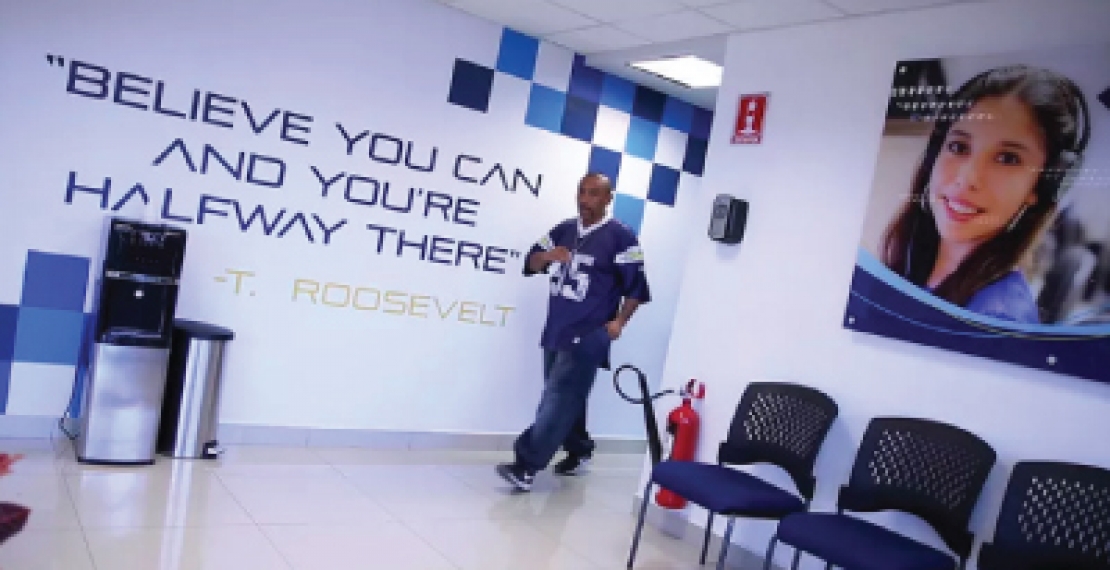
In 2017, CNET en Español reported on an important social and workforce story developing in Tijuana: Mexican nationals returning from the United States were finding new career opportunities in the city's growing contact center industry, where their English-language skills and familiarity with U.S. culture could become valuable professional assets.
In November 2017, CCSI highlighted reporting from CNET en Español examining how Tijuana's contact center industry was providing employment opportunities for Mexican nationals who had returned to Mexico after spending significant portions of their lives in the United States.
Many of the people featured in the report had grown up, studied, or worked in the United States. Returning to Mexico meant adapting to a country that, for some, felt unfamiliar despite being their country of birth.
For contact centers serving U.S. customers, however, their experience created an unusual combination of skills: fluent English, familiarity with U.S. culture, and an understanding of North American customers.
The story also illustrated one of the characteristics that continues to distinguish Tijuana as a nearshore contact center location: its deep social, cultural, and economic connection with Southern California and the United States.
One of the employees profiled by CNET was Juan Manuel Martínez Mota.
Martínez Mota was born in Mexico City and moved to the United States when he was 13 years old. After spending much of his life there, he was deported to Mexico and eventually arrived in Tijuana.
According to the 2017 report, adapting was difficult at first. He did not have a technology background when he entered the contact center industry, but his English-language and communication skills helped open a new professional opportunity.
“I didn't know anything about computers, but they gave me a chance and that's all I wanted.”
— Juan Manuel Martínez Mota, CCSI trainer at the time
By the time CNET visited CCSI, Martínez Mota had developed into a trainer who helped new employees integrate into their positions.
His story demonstrated that the value of a bilingual workforce extends beyond language alone. Communication skills, cultural understanding, training, and professional development can help employees build long-term careers in the contact center industry.
The CNET report described a workforce shaped by Tijuana's unusual relationship with the United States.
Some employees had developed English through school and life in the border region. Others had lived for many years in the United States and returned to Mexico with native or near-native English and firsthand knowledge of American culture.
Jorge Oros, who at the time served as President of the Baja Contact Center Cluster and Vice President of Operations at CCSI, explained that the regional industry was recruiting from both of these talent pools.
The report cited an industry estimate suggesting that a significant percentage of bilingual contact center employees in the region at that time had previously lived in the United States and had been deported. The original article explicitly noted that exact figures were not available, so this estimate should be understood strictly as historical industry context rather than a current workforce statistic.
For U.S.-focused contact centers, understanding American customers can be just as important as speaking English.
Employees who have lived in the United States may be familiar with American communication styles, holidays, entertainment, business practices, consumer expectations, and everyday cultural references.
Today, CCSI describes its Mexico contact center workforce as bilingual and bicultural, with employees recruited and trained to support North American customers.
The CNET story was also about employment and personal transition.
Returning to Mexico after many years in the United States can create significant challenges. Some people may need to rebuild professional networks, adjust to different systems, improve their Spanish, or translate skills developed in the U.S. into employment opportunities in Mexico.
Tijuana's contact center industry provided one possible path because English-language ability and familiarity with U.S. consumers could immediately have professional value.
Another employee featured in the report was Luis Delgado Huerta, who had moved to the United States as an infant and returned to Mexico in 2011. After joining CCSI, he progressed into a supervisory position over the following years.
His experience reflected an important theme in the original story: contact center employment could become more than an entry-level job. Employees could develop leadership, training, supervisory, and operational skills and build careers in Mexico.
That philosophy continues to be central to CCSI's company culture, which today emphasizes internal growth, professional development, leadership training, recognition, and long-term career opportunities.
The original CNET report also documented the rapid growth of the contact center industry in Baja California during this period.
At the time, the Baja Contact Center Cluster reported more than 50 contact centers employing approximately 12,000 people in the region, supporting industries including technology, tourism, financial services, customer service, and debt collection.
The 2017 CCSI article cited U.S. Department of Homeland Security statistics showing that 242,456 Mexican nationals were removed from the United States during fiscal year 2015. Those statistics were included to explain the broader migration environment surrounding the workforce story and should be understood as historical figures rather than current immigration data.
The U.S. Department of Homeland Security continues to maintain historical immigration enforcement data through its Yearbook of Immigration Statistics.
The workforce profile of a modern Tijuana contact center should not be defined by deportation status.
Today, CCSI recruits and develops bilingual and bicultural professionals for nearshore operations supporting North American customers, with training focused on customer service, communication, technical knowledge, and job-specific skills.
CCSI currently reports that approximately 40% of its workforce has lived in or frequently traveled to the United States, contributing to the cultural familiarity that supports North American customer interactions.
That broader bilingual and bicultural recruitment pool remains one of the principal advantages of nearshore contact center operations in Mexico.
Historical perspective: The lasting value of this 2017 story is not a statistic about deportation. It is the example of people using language, cultural knowledge, and professional development to build new careers and contribute to high-performance teams in Mexico.
This article summarizes reporting originally published by CNET en Español about Mexican nationals who returned from the United States and found employment and career opportunities within Tijuana's growing contact center industry.
The original reporting included interviews with CCSI employees and regional contact center industry leadership and documented the workforce environment as it existed in 2017.
Call Center Services International (CCSI) helps U.S. companies establish and manage high-performance nearshore contact center operations in Mexico, combining experienced bilingual talent, professional facilities, and local operational support. Its strategically located centers include Tijuana, Mexico City, and Guadalajara.
CCSI's bilingual and bicultural call center agents combine English-language capability, cultural familiarity, professional training, and customer service skills to support North American operations. The company's people-first culture emphasizes recognition, continuous development, internal growth, and leadership opportunities.
Through recruiting, training, Workforce Management, Quality Assurance, technology infrastructure, and client-specific operational support, CCSI helps organizations build stable and experienced teams while taking advantage of the broader benefits of nearshore operations in Mexico.
Historical note: First published in 2017, this page has been reviewed and updated while preserving the employee stories, regional workforce context, immigration statistics, and leadership roles presented in the original CNET en Español coverage. The article has been maintained as a summary of that external media coverage rather than reproducing the original third-party article. Names, workforce estimates, statistics, and company roles described in the historical sections reflect information presented at the time and should not be interpreted as current workforce demographics or company positions.
Originally published: November 14, 2017
Last reviewed and updated: July 26, 2026



The latest industry insights & news from CCSI, Specialists in Establishing Contact Centers in Mexico for Debt Collection, Customer Service, Sales, BPO and more.