
NEWS & INSIGHTS
The latest industry insights & news from CCSI, Specialists in Establishing Contact Centers in Mexico for Debt Collection, Customer Service, Sales, BPO and more.

NEWS & INSIGHTS
The latest industry insights & news from CCSI, Specialists in Establishing Contact Centers in Mexico for Debt Collection, Customer Service, Sales, BPO and more.
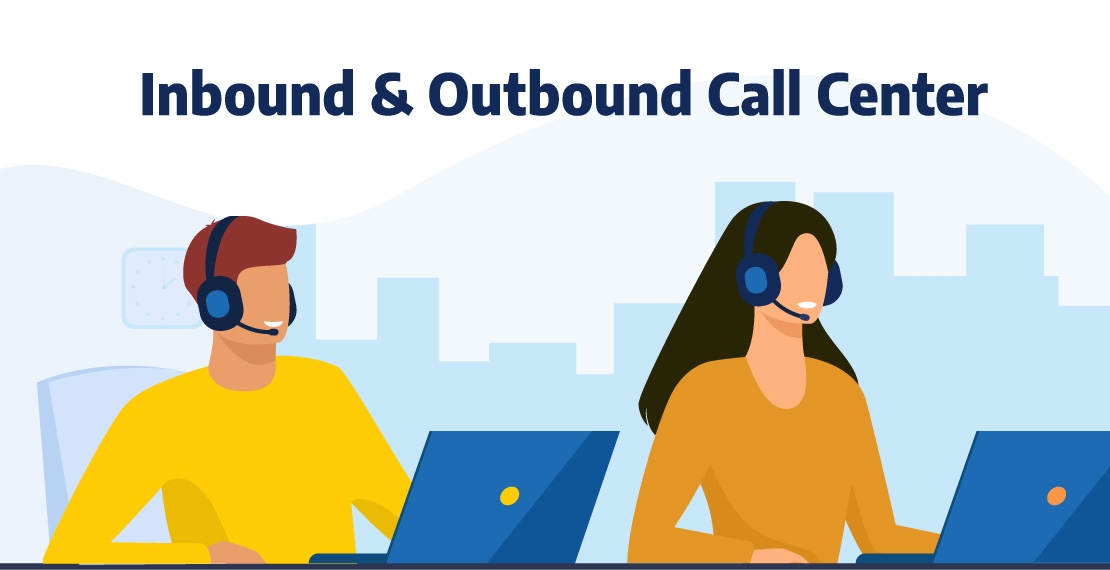
Inbound and outbound call centers serve different purposes, but both help organizations reach, support, and engage with customers. Understanding the difference between the two models can help you determine which services, technology, workforce, and operating structure best fit your customer experience and business goals.
An inbound call center primarily handles communications initiated by customers, prospects, or other external contacts. Traditionally, this means receiving incoming telephone calls, although modern contact centers may also manage inbound interactions through email, live chat, SMS, messaging, and other digital channels.
One of the most common inbound functions is customer service, but inbound teams can support many additional processes depending on the organization and industry.
Common inbound contact center services include:
Technical support agents help customers resolve problems involving products, systems, accounts, passwords, connectivity, software, devices, or other technical issues.
The complexity of these interactions can range from basic troubleshooting to specialized technical assistance. Organizations with more advanced requirements may also use dedicated IT and technical support teams.
Customers may contact an inbound center to place or modify an order, ask questions about a transaction, confirm account information, resolve billing concerns, or receive assistance with payment-related issues.
These interactions often require agents to access customer records, explain policies clearly, and guide customers through the appropriate next steps.
Inbound interactions can also create opportunities to generate additional value. A customer contacting the company for service may be interested in upgrading a plan, adding a product, renewing a service, or learning about another solution relevant to their needs.
Successful upselling or cross-selling should complement the reason for the customer's contact rather than distract from resolving the original request.
Inbound agents may answer questions about products, services, policies, appointments, account status, deliveries, availability, or other information customers need throughout their relationship with a company.
These interactions can influence customer satisfaction and brand perception because the contact center often becomes one of the customer's most direct connections with the organization.
An outbound call center primarily manages communications initiated by the organization. Agents contact existing customers, prospects, businesses, or other individuals according to the objectives of the campaign or business process.
Modern outbound operations may use telephone calls alongside email, SMS, CRM workflows, and other communication tools, depending on the program and applicable requirements.
Common outbound contact center services include:
Outbound agents can support sales organizations by identifying prospects, qualifying opportunities, gathering information, scheduling appointments, updating CRM records, and transferring qualified prospects to the appropriate sales representative.
A structured Sales and Lead Generation Contact Center can extend the capacity of an internal sales organization while allowing specialized agents to focus on prospecting and qualification.
Outbound sales agents contact prospects or existing customers to introduce products and services, explain offers, identify needs, follow up on previous interest, and pursue sales opportunities.
Effective outbound sales programs require more than simply increasing call volume. Agent training, customer data, scripts or conversation guidelines, performance management, Quality Assurance, and appropriate technology all contribute to the success of the campaign.
Outbound teams can contact customers or target audiences to collect feedback and better understand satisfaction levels, purchasing behavior, preferences, market conditions, and other information relevant to the organization.
The information gathered through surveys can support customer experience improvements, product development, service changes, and sales or marketing decisions.
Outbound contact centers can also support account servicing, payment reminders, receivables management, and debt collection operations.
These programs typically require specialized agent training, Quality Assurance, appropriate technology, documented processes, and compliance with the requirements applicable to the specific operation.
The simplest difference is who initiates the interaction.
Inbound: the customer, prospect, or external party initiates the contact. Examples include customer service, technical support, billing questions, order management, and account assistance.
Outbound: the organization or its representative initiates the contact. Examples include lead generation, sales, surveys, appointment setting, account follow-up, and debt collection.
The two models may also require different technology and management strategies. Inbound operations frequently focus on queue management, routing, wait times, service levels, and first-contact resolution. Outbound operations may place greater emphasis on contact strategies, CRM integration, dialing tools, conversion rates, promise-to-pay rates, lead qualification, or other campaign-specific performance indicators.
Regardless of direction, both models benefit from professional agents, clear processes, effective training, Workforce Management, and a structured Quality Assurance and Call Monitoring program.
Organizations do not necessarily have to choose exclusively between inbound and outbound operations. A hybrid or blended contact center can support both types of customer interactions within the same broader operation.
Depending on the program, the same agents may handle both incoming and outgoing interactions, or specialized inbound and outbound teams may operate under a common management structure.
For example, an inbound customer service team may resolve customer inquiries while also identifying opportunities for upgrades. An outbound team might follow up with customers after an interaction, conduct satisfaction surveys, schedule appointments, or reconnect with prospects.
A blended structure can help organizations coordinate communication across the customer journey, but the correct design depends on call volume, agent skills, customer expectations, technology, scheduling, and the complexity of each business process.
The best model depends on what your organization needs the contact center to accomplish.
Companies with large volumes of customer inquiries may prioritize inbound Customer Service or technical support. Organizations focused on generating new business may require a stronger outbound Sales and Lead Generation operation. Others may benefit from combining multiple functions through a broader BPO services strategy.
Other considerations include workforce availability, required agent skills, operating hours, customer communication channels, information security, regulatory requirements, technology, scalability, management control, and operating cost.
Nearshore operations can provide another option for organizations that need to increase inbound or outbound capacity. Access to a bilingual and bicultural workforce, geographic proximity to the United States, professional infrastructure, and additional recruiting markets can support both customer service and outbound business processes.
Call Center Services International (CCSI) helps U.S. organizations establish and manage Nearshore Contact Center operations in Mexico. CCSI combines professional bilingual and bicultural agents with recruiting, Human Resources, training, Workforce Management, Quality Assurance, technology infrastructure, and operational support.
CCSI supports both inbound and outbound operations, including Customer Service, Sales and Lead Generation, Debt Collection, loan servicing, technical support, and other BPO services. Teams can operate from CCSI's professional contact center facilities in Mexico or through a secure Work-From-Home model.
These operations are supported by CCSI's cybersecurity and compliance framework and technology infrastructure, helping organizations scale inbound, outbound, or blended Nearshore teams while maintaining close operational alignment with their U.S. organization.
Historical note: First published in June 2021, this article has been reviewed and updated while preserving its original purpose of explaining the differences between inbound, outbound, and hybrid call center operations. Examples, terminology, technology considerations, and service descriptions have been expanded to reflect the broader role of modern contact centers while maintaining the original inbound-versus-outbound framework.
Originally published: June 23, 2021
Last reviewed and updated: July 25, 2026



The latest industry insights & news from CCSI, Specialists in Establishing Contact Centers in Mexico for Debt Collection, Customer Service, Sales, BPO and more.