

NEWS & INSIGHTS
The latest industry insights & news from CCSI, Specialists in Establishing Contact Centers in Mexico for Debt Collection, Customer Service, Sales, BPO and more.

NEWS & INSIGHTS
The latest industry insights & news from CCSI, Specialists in Establishing Contact Centers in Mexico for Debt Collection, Customer Service, Sales, BPO and more.
Are you in the process of selecting a Contact Center outsourcing company? Before making a decision, make sure you understand not only what the provider offers, but also who will manage your operation, what technology and security controls are available, how performance will be measured, and what existing clients say about working with the company.
Selecting a partner to manage your Contact Center requires research and careful evaluation. The provider and its agents may communicate directly with your customers and become an extension of your brand, making it important to ask the right questions before beginning the relationship.
The following five questions can help you evaluate the people, infrastructure, security, performance capabilities, and experience of potential Contact Center outsourcing providers.
If you are going to delegate part of your business operation to another company, you should understand who will manage it and whether the people assigned to your program have the knowledge and experience required for your processes.
For a Contact Center operation, ask about the qualifications and experience of the agents who may support your customers. Depending on your requirements, this may include English proficiency, bilingual capabilities, customer service experience, communication skills, technical knowledge, negotiation skills, or previous experience within your industry.
The experience of the management team is equally important. Ask whether managers and department leaders understand the type of processes, systems, performance requirements, and customer interactions involved in your operation.
You can also ask about the provider's recruiting and selection process, candidate assessments, training requirements, and the qualifications expected for different Contact Center positions.
When possible, consider making an on-site visit to meet agents, Supervisors, Managers, and members of the operational support team firsthand.
Modern Contact Center operations depend heavily on technology. Before selecting an outsourcing provider, determine whether its infrastructure can support the systems, applications, connectivity, interaction volumes, and operational requirements of your program.
Ask about the systems and computer equipment the provider uses and whether they meet your technical requirements. If additional technology or equipment is necessary, determine whether it can be implemented and whether additional costs will apply.
Infrastructure questions may include:
Include members of your IT team in technical discussions whenever appropriate so they can verify whether the provider's infrastructure can support your current systems and future requirements.
An on-site visit can also provide an opportunity to inspect the physical infrastructure and ask technical questions directly to the teams responsible for supporting the operation.
If your outsourced team will access sensitive customer information, payment data, business processes, applications, or proprietary information, security should be a central part of your vendor evaluation.
Ask how the provider protects its networks, systems, workstations, and user accounts. Depending on the operation, relevant controls may include firewalls, secure remote access, identity and access management, network segmentation, endpoint protection, encryption, monitoring, and user restrictions.
Physical security should also be evaluated. Ask about visitor procedures, restricted operational areas, access controls, video surveillance, and policies governing who may enter areas where sensitive client operations are performed.
Independent audits, recognized standards, and compliance frameworks can provide additional evidence when evaluating a provider. Depending on your industry and the information being handled, relevant considerations may include SOC 2, ISO/IEC 27001, PCI DSS, HIPAA compliance, and other applicable regulatory requirements.
You should also ask about incident response, employee security awareness, business continuity, disaster recovery, security assessments, and how the organization responds when vulnerabilities or security incidents are identified.
Review the provider's documented Cybersecurity Certifications & Compliance information and determine whether its controls align with the requirements of your operation.
An outsourcing provider should be evaluated on more than its ability to reduce operating costs. The relationship should also support the performance, service quality, customer experience, and operational objectives established for your Contact Center.
Ask how the provider will manage your program after implementation. Will you receive regular reports? Which KPIs will be monitored? How frequently will performance be reviewed? What happens when results fall below expectations?
You should also understand how the provider handles Quality Assurance and Call Monitoring, coaching, scorecards, performance reviews, reporting, and continuous improvement.
Look for a provider that will work collaboratively with your organization rather than simply launching the program and leaving it unchanged. Clear communication and ongoing performance reviews can help both organizations identify problems and make appropriate improvements over time.
Case studies and documented client results can also help demonstrate how the provider has supported other organizations with similar objectives.
Outsourcing companies can explain their capabilities through proposals, presentations, and marketing materials, but existing or previous clients can provide another valuable perspective on the actual working relationship.
When references are available, consider asking clients about:
It can also be valuable to determine whether the provider has experience with organizations or processes similar to yours and whether those relationships have continued successfully over time.
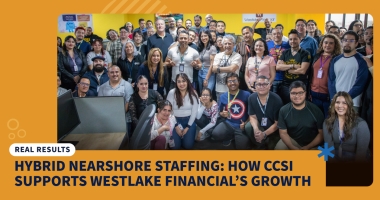
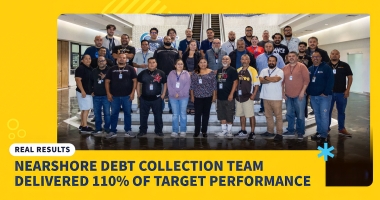
In addition to direct references, review documented client testimonials and success stories to better understand the types of programs the provider has supported and the results clients have reported.
Using a consistent set of questions can make it easier to compare outsourcing providers objectively. Experience, infrastructure, security, performance management, and client references should be evaluated together rather than considering any single factor in isolation.
These questions can also become part of a more formal Contact Center RFP, allowing your team to document vendor responses and compare them against the operational requirements that matter most to your organization.
The goal is to identify a provider capable of becoming a reliable extension of your business while protecting your customers, supporting your workforce, and helping your Contact Center achieve its performance objectives.
Call Center Services International (CCSI) helps U.S. organizations establish and manage Nearshore Contact Center operations in Mexico. CCSI combines professional bilingual and bicultural agents with recruiting, training, Workforce Management, technology infrastructure, and operational support.
CCSI supports organizations through professional Contact Center infrastructure, ongoing performance management, Quality Assurance and Call Monitoring, and a comprehensive cybersecurity and compliance framework.
Organizations evaluating CCSI can also review its client testimonials and success stories and learn more about the experience, performance, and long-term partnerships developed through its Nearshore Contact Center model.
Historical note: First published in August 2022, this article has been reviewed and updated while preserving its original five-question framework for evaluating a Contact Center outsourcing provider: personnel experience, infrastructure and technology, security, performance management, and client references. Security terminology and internal resources have been updated where appropriate while maintaining the article's original purpose and decision-making structure.
Originally published: August 16, 2022
Last reviewed and updated: July 25, 2026



The latest industry insights & news from CCSI, Specialists in Establishing Contact Centers in Mexico for Debt Collection, Customer Service, Sales, BPO and more.