

NEWS & INSIGHTS
The latest industry insights & news from CCSI, Specialists in Establishing Contact Centers in Mexico for Debt Collection, Customer Service, Sales, BPO and more.

NEWS & INSIGHTS
The latest industry insights & news from CCSI, Specialists in Establishing Contact Centers in Mexico for Debt Collection, Customer Service, Sales, BPO and more.
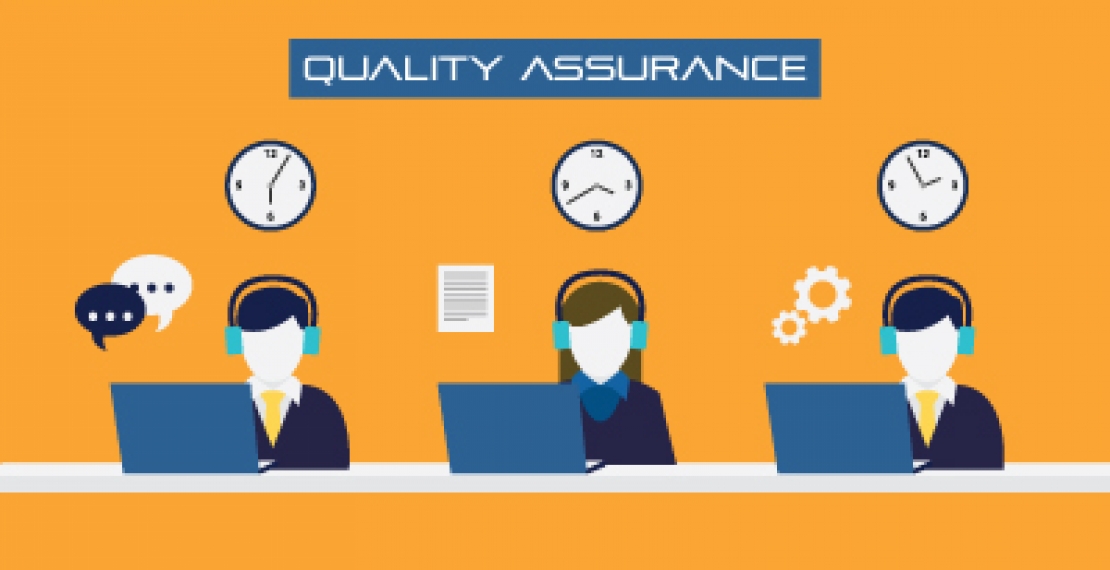
Quality Assurance is one of the most important tools a contact center can use to improve performance, strengthen customer experience, identify coaching opportunities, and maintain consistent service standards. A strong QA program goes beyond simply listening to calls; it helps organizations understand what is working, what needs improvement, and how agents can continue developing their skills.
Quality monitoring in contact centers is a key part of continuous improvement. It can help identify opportunities within customer interactions, support compliance requirements, provide useful documentation, and give managers greater visibility into how service is being delivered.
Quality Assurance also helps agents work toward performance goals, supports process improvement, and can contribute to better customer experiences and higher satisfaction.
Unfortunately, some organizations still treat QA primarily as an evaluation or auditing function. A more effective approach is to use quality monitoring as a tool for coaching, operational improvement, and employee development.
Here are five important practices every Quality Assurance team should consider.
Phone calls remain an important communication channel for many contact centers, but they are only one part of the customer journey.
Organizations may also interact with customers through email, chat, SMS, social platforms, and other digital channels. Each of these interactions can influence the customer's perception of the brand and should therefore be considered within the QA process.
Monitoring multiple channels allows organizations to evaluate whether customers receive a consistent level of service regardless of how they choose to communicate.
CCSI's Quality Assurance and Call Monitoring services include both call monitoring and email/chat quality monitoring to support broader customer interaction analysis.
Another common mistake is using exactly the same metrics or scorecard for every communication channel.
Each channel has different customer expectations, operating characteristics, and service objectives.
For example, response-time expectations for live chat are very different from those for email. A telephone interaction may place greater emphasis on active listening, call control, and verbal communication, while written channels may require additional focus on clarity, grammar, tone, and completeness.
Quality metrics should therefore reflect the purpose and characteristics of each channel while still supporting the organization's overall customer experience standards.
Scorecards should measure behaviors and outcomes that are actually relevant to the interaction being evaluated.
Depending on the program, this might include communication quality, accuracy, compliance, problem resolution, documentation, empathy, first-call resolution, or other client-specific requirements.
CCSI's current QA approach includes quality monitoring scorecards, performance data, coaching recommendations, and process audits designed around each client's operational requirements.
Quality monitoring often focuses heavily on low-performing or average-performing agents because managers naturally want to identify problems that require improvement.
Top performers, however, can provide equally valuable information.
Monitoring strong agents can help QA teams identify behaviors, communication techniques, workflows, or problem-solving approaches that are producing consistently successful customer interactions.
Those insights can then be incorporated into training and coaching programs to help other agents improve their performance.
Top performers should also continue receiving feedback. Strong performance does not mean development should stop. Experienced agents can still refine their skills, adapt to changing customer expectations, and prepare for future leadership opportunities.
When agents participate in the quality process, QA can become more collaborative and less intimidating.
Frontline employees often have valuable insight into customer concerns, operational challenges, recurring questions, and areas where existing scorecards may not fully reflect what happens during actual interactions.
Organizations can involve agents by asking for feedback on scorecards, encouraging self-evaluation, discussing areas they would personally like to improve, and using coaching sessions as two-way conversations.
This helps reinforce the idea that Quality Assurance exists not simply to identify mistakes but to support agents and improve performance.
A strong QA program should help agents understand how to improve, not simply tell them what they did wrong.
Creating a culture where employees participate in improvement is also closely connected to employee engagement and company culture.
Calibration is essential for maintaining consistent and reliable quality evaluations.
During a calibration session, multiple QA specialists, supervisors, or managers evaluate the same customer interaction using the same scorecard.
The resulting scores and comments are then compared.
If evaluators reach very different conclusions, the organization may need to clarify the scoring criteria, revise the scorecard, or provide additional training to evaluators.
Regular calibration helps reduce subjectivity and ensures that agents are evaluated according to consistent expectations.
It also helps organizations identify areas where guidelines may be unclear or where different supervisors interpret performance standards differently.
Consistent evaluation is particularly important when quality scores are connected to coaching, incentives, compliance requirements, client reporting, or performance management.
The five practices above remain fundamental, but contact center Quality Assurance has continued to evolve since this article was first published in 2017.
Traditional human QA teams typically review selected customer interactions and use those evaluations to identify patterns, provide coaching, and measure performance.
Newer AI-powered quality tools can expand that process by automatically analyzing larger volumes of interactions, identifying trends, generating transcripts and reports, and flagging potential quality or compliance issues for review.
CCSI's AI-powered QA & Compliance Agents are designed to analyze customer interactions and provide managers with additional information that can support compliance monitoring, coaching, and operational improvement.
AI does not eliminate the need for experienced QA professionals. Human judgment remains important when evaluating context, coaching agents, interpreting complex customer situations, and deciding how insights should be applied to the operation.
An effective Quality Assurance program should create a continuous cycle of monitoring, analysis, coaching, and improvement.
Organizations can use QA information to identify individual coaching opportunities, discover recurring process problems, improve training materials, recognize high-performing employees, refine scorecards, and better understand the customer experience.
Quality data can also help managers evaluate whether processes and performance expectations are producing the intended results.
The greatest value of Quality Assurance comes from what an organization does with the information after the interaction has been evaluated.
CCSI's bilingual and bicultural agents are supported by training, supervision, QA processes, and ongoing coaching designed to help maintain consistent customer interactions.
Call Center Services International (CCSI) helps U.S. companies establish and manage high-performance bilingual nearshore contact centers in Mexico.
CCSI provides dedicated Quality Assurance and Call Monitoring specialists who evaluate customer interactions, measure performance, support agent coaching, and help organizations identify opportunities for operational improvement.
CCSI combines QA professionals, bilingual and bicultural talent, technology infrastructure, professional facilities, administrative support, and AI-powered quality tools to help clients improve contact center performance and customer experience.
Explore CCSI's Quality Assurance & Call Monitoring Solutions
Historical note: This article was originally published in 2017. The five original Quality Assurance recommendations have been preserved while the language, structure, internal links, and discussion of modern QA technology have been reviewed for current relevance.
Originally published: July 10, 2017
Last reviewed and updated: July 25, 2026



The latest industry insights & news from CCSI, Specialists in Establishing Contact Centers in Mexico for Debt Collection, Customer Service, Sales, BPO and more.