

NEWS & INSIGHTS
The latest industry insights & news from CCSI, Specialists in Establishing Contact Centers in Mexico for Debt Collection, Customer Service, Sales, BPO and more.

NEWS & INSIGHTS
The latest industry insights & news from CCSI, Specialists in Establishing Contact Centers in Mexico for Debt Collection, Customer Service, Sales, BPO and more.
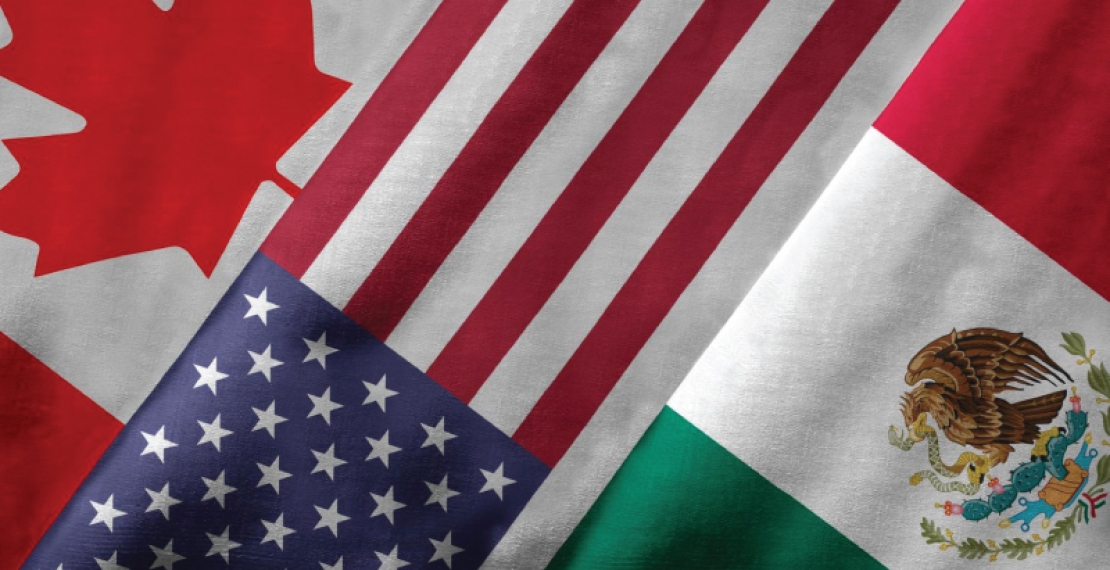
The United States-Mexico-Canada Agreement (USMCA) reinforces the deep economic relationship between Mexico and the United States while providing a modern framework for regional trade, digital commerce, investment, and cross-border business. For companies evaluating nearshore operations in Mexico, that integration adds another strategic advantage to Mexico's proximity, bilingual workforce, infrastructure, and access to U.S. markets.
The USMCA was negotiated as the successor to the North American Free Trade Agreement (NAFTA), modernizing the rules governing trade among the United States, Mexico, and Canada.
When the agreement was announced in 2018, it attracted significant attention from companies evaluating Mexico as a nearshore destination because it reinforced the long-standing economic relationship between Mexico and the United States while introducing provisions designed for a more digital and interconnected economy.
The USMCA entered into force on July 1, 2020, officially replacing NAFTA.
The agreement covers areas including trade in goods and services, digital trade, intellectual property, financial services, labor, rules of origin, and other aspects of the North American economic relationship.
Nearshoring places business processes, production, technology, or service operations closer to the company's primary market.
For U.S. companies, Mexico offers a combination of geographic proximity, integrated business relationships, cultural familiarity, bilingual talent, established infrastructure, and time-zone alignment that can make it an attractive alternative to more distant offshore destinations.
The USMCA strengthens that broader environment by providing a common framework for economic activity across North America.
Mexico's value as a nearshore destination therefore extends beyond labor cost. Companies should evaluate the complete operating environment, including:
These advantages are explored further in CCSI's 6 Reasons Why American Contact Centers Choose To Nearshore In Mexico.
Mexico and the United States have highly integrated economies supported by decades of cross-border commerce and investment.
Mexico consistently ranks among the United States' top two trading partners, demonstrating the scale of the commercial relationship between the two countries.
That relationship includes much more than manufacturing. U.S. and Mexican companies also work together across professional services, financial services, technology, logistics, Customer Service, business process operations, healthcare support, and other industries.
For companies considering a nearshore contact center in Mexico, this level of integration means operating within a business environment already deeply connected to the United States.
The U.S.-Mexico relationship involves hundreds of billions of dollars in annual trade and highly integrated supply chains across industries including automotive, electronics, medical devices, machinery, agriculture, and services.
For service organizations, that economic integration supports a broader ecosystem of professional talent, technology providers, telecommunications, financial services, transportation, and business infrastructure.
This is one reason nearshoring should be considered more than simply moving jobs to a lower-cost country. It can be a strategy for placing operations inside the same North American business ecosystem.
One of the major differences between NAFTA and USMCA is the inclusion of a dedicated Digital Trade chapter.
NAFTA was negotiated before modern cloud computing, digital platforms, online commerce, and today's volume of cross-border data exchange became fundamental parts of business operations.
USMCA includes provisions addressing areas such as:
These provisions are especially relevant to industries where work and information move electronically between locations.
Modern contact center operations depend heavily on digital systems.
Agents may use:
A modern framework for digital commerce complements the ability of U.S. organizations to integrate nearshore teams into their existing technology environments.
USMCA does not eliminate a company's responsibility to comply with privacy, cybersecurity, financial, healthcare, or other sector-specific requirements. Those obligations still need to be evaluated according to the type of data, customer, service, and industry involved.
CCSI supports these requirements through its Cybersecurity & Compliance framework and technology infrastructure for nearshore operations.
Another important objective of North American trade policy is strengthening regional supply chains and increasing economic activity within the United States, Mexico, and Canada.
That strategy has increased interest in nearshoring as organizations examine the operational risk of depending too heavily on distant locations.
Although much of the discussion surrounding supply chains focuses on manufacturing, similar principles can apply to business services.
Companies may benefit from positioning Customer Service, finance, IT, software development, back-office operations, and other support functions closer to their primary U.S. operations.
A nearshore model can provide practical advantages that are not directly created by the USMCA but are reinforced by the broader U.S.-Mexico relationship:
CCSI's strategic locations in Tijuana, Mexico City, and Guadalajara give clients access to multiple workforce markets while remaining within Mexico's integrated North American business environment.
The U.S.-Mexico commercial relationship includes a substantial services economy in addition to trade in physical goods.
This matters for organizations evaluating nearshore business operations because contact centers, software development, IT support, finance, administrative services, and other BPO functions depend primarily on people, digital infrastructure, technology, and secure information exchange rather than physical shipments.
CCSI supports U.S. organizations across multiple service areas, including:
These operations can be integrated with the client's existing U.S. organization while CCSI provides the local workforce, Human Resources, facilities, technology infrastructure, recruiting, and operational support required in Mexico.
The USMCA includes a formal review mechanism intended to evaluate the operation of the agreement and address evolving economic and trade conditions.
As of July 2026, the first USMCA Joint Review process is underway.
The United States and Mexico have been conducting bilateral negotiating rounds covering issues including economic security, rules of origin, labor, agriculture, steel and aluminum, automobiles, and electronic payment services.
Following the third bilateral negotiating round in Mexico City in July 2026, U.S. and Mexican officials directed their teams to continue discussions with a fourth bilateral round scheduled for Washington, D.C. in September 2026.
The review process means companies should avoid treating the agreement as a static document. North American trade policy continues to evolve as the three countries respond to changing supply chains, technology, economic security, and regional competitiveness.
Regardless of individual issues being discussed during the review, the economic relationship between Mexico and the United States remains substantial.
Mexico continues to rank among the United States' most important trading partners, and the two countries maintain deeply integrated commercial relationships across manufacturing and services.
For organizations evaluating nearshore operations, that economic connection is one component of a broader Mexico strategy that also includes workforce availability, infrastructure, proximity, cost structure, cultural alignment, security, and operational control.
A U.S. company does not choose Mexico for a contact center simply because of a trade agreement.
The strategic value comes from the combination of several advantages:
USMCA supports the broader regional environment in which these nearshore operations function.
CCSI's nearshore model allows clients to maintain control over important aspects of their operation, including:
CCSI provides the local infrastructure required to establish and support the operation in Mexico, including recruiting, Human Resources, facilities, IT infrastructure, Workforce Management, and administrative support.
Companies can evaluate the Turnkey Program or Corporate Advantage Program depending on the level of control, infrastructure, and support required.
Cost remains an important part of any contact center expansion decision, but nearshore strategy should be evaluated on total business value.
Organizations should consider:
Mexico's participation in the USMCA strengthens its position within the North American economy, while its geographic and workforce advantages make it particularly relevant for U.S. companies seeking additional contact center capacity.
CCSI's Nearshore Benefits provide a more complete view of how workforce, proximity, infrastructure, cost, and operational control work together.
Call Center Services International (CCSI) helps U.S. organizations establish and manage high-performance nearshore contact center operations in Mexico.
CCSI combines professional bilingual and bicultural agents with recruiting, Human Resources, continuous training, Workforce Management, technology infrastructure, professional contact center facilities, and operational support.
With operations in Tijuana, Mexico City, and Guadalajara, CCSI gives U.S. companies access to multiple workforce markets while maintaining close geographic, cultural, and operational alignment with their U.S. teams.
Clients can maintain their own systems, processes, training requirements, KPIs, Quality Assurance standards, and Customer Experience objectives while CCSI provides the resources required to establish and support their operation in Mexico.
Historical note: First published in October 2018 following the announcement of the USMCA, this article has been reviewed and updated to reflect the agreement's entry into force in 2020, the growth of North American economic integration, modern digital trade considerations, and the 2026 USMCA Joint Review while preserving its focus on the strategic importance of Mexico for nearshore operations.
Originally published: October 17, 2018
Last reviewed and updated: July 26, 2026



The latest industry insights & news from CCSI, Specialists in Establishing Contact Centers in Mexico for Debt Collection, Customer Service, Sales, BPO and more.