

NEWS & INSIGHTS
The latest industry insights & news from CCSI, Specialists in Establishing Contact Centers in Mexico for Debt Collection, Customer Service, Sales, BPO and more.

NEWS & INSIGHTS
The latest industry insights & news from CCSI, Specialists in Establishing Contact Centers in Mexico for Debt Collection, Customer Service, Sales, BPO and more.
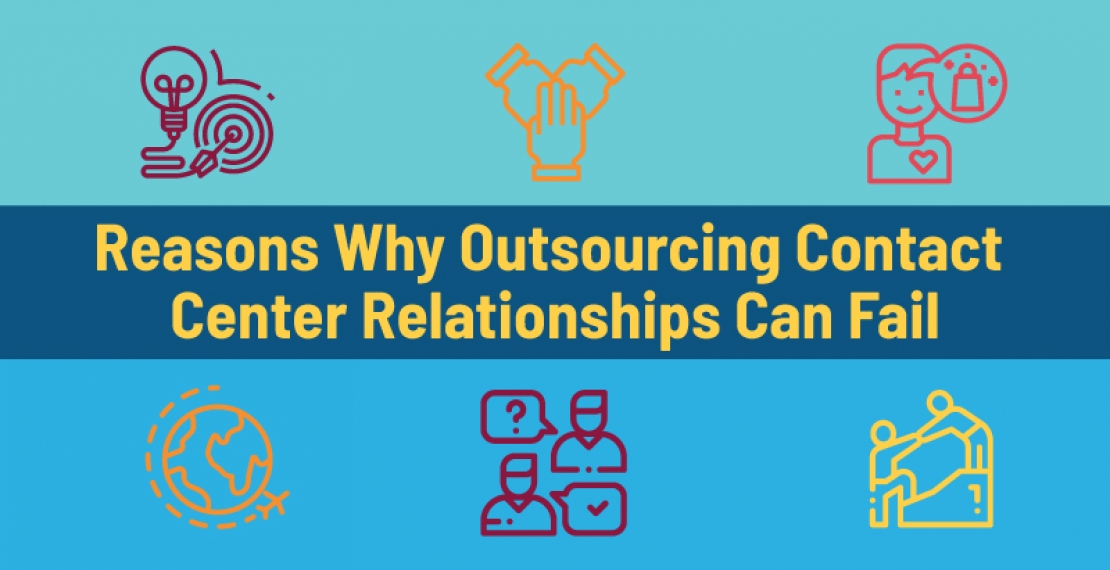
A successful contact center partnership requires much more than selecting a provider and signing a contract. Because an external contact center interacts directly with your customers, systems, processes, and brand, the relationship must be built around clear expectations, effective knowledge transfer, cultural alignment, communication, financial transparency, client involvement, and mutual trust.
Outsourcing can help organizations expand capacity, access specialized talent, improve operational flexibility, and focus internal resources on core business priorities. However, a contact center partnership can only deliver those benefits when both organizations understand their responsibilities and work toward common objectives.
The strongest relationships treat the contact center as an extension of the client's operation rather than a disconnected third-party service.
Many contact center relationships begin to struggle because the objectives were never clearly defined.
Before implementation, both organizations should understand what the operation is expected to accomplish.
Important questions include:
Objectives such as “reduce costs,” “improve Customer Service,” or “increase capacity” are useful starting points, but they need to be translated into measurable operational goals.
Depending on the program, those goals may include:
Both organizations should also agree on reporting, governance, escalation procedures, and how performance issues will be addressed.
CCSI's Quality Assurance and Call Monitoring services help clients establish structured performance evaluation, scorecards, coaching, and continuous improvement within their nearshore operations.
A contact center cannot accurately represent a company without understanding its products, customers, processes, systems, policies, and brand expectations.
Knowledge transfer becomes difficult when:
Organizations should identify the knowledge required to perform the work successfully and create a structured process for transferring it.
That process may include:
Train-the-trainer programs can also help develop local supervisors and trainers who understand the client's operation and can transfer that knowledge consistently as the team grows.
Products, systems, promotions, regulations, customer expectations, and business processes change over time.
The nearshore team should receive updates at the same time as the client's internal teams whenever those changes affect the customer experience or operational process.
CCSI supports its bilingual and bicultural contact center agents through continuous training, coaching, mentoring, and client-specific development.
Price, infrastructure, and technical capabilities are important when evaluating a contact center partner, but organizational compatibility also matters.
The team will interact with your customers and may eventually become deeply integrated into your company's daily operation.
Before selecting a provider, consider whether there is alignment in areas such as:
Reviewing a provider's Mission, Vision & Values and Company Culture can provide insight into how the organization operates beyond its sales presentation.
For U.S. companies, the cultural alignment of the workforce serving customers is also important.
CCSI's bilingual and bicultural workforce in Mexico provides English and Spanish capabilities combined with familiarity with U.S. customer expectations and business culture.
Communication is one of the foundations of a successful contact center relationship.
Problems can arise when:
Communication should continue throughout the life of the partnership, not only during implementation.
Depending on the size and complexity of the operation, the relationship may benefit from structured:
These meetings should examine more than metrics. They should also address staffing, Customer Experience, training, technology, compliance, upcoming business changes, employee feedback, and opportunities for improvement.
A nearshore team should know when the client changes:
Giving the team advance notice allows training, systems, documentation, staffing, and Quality Assurance requirements to be adjusted before the change reaches customers.
A contact center proposal should be evaluated based on the total operating model, not simply the advertised hourly rate.
Potential costs may include:
Pricing should clearly explain what is included, what is billed separately, what costs can change, and who must approve additional expenses.
A lower hourly rate does not necessarily produce a lower total cost if the model requires additional management, travel, technology, turnover replacement, implementation expenses, or hidden fees.
Likewise, a slightly higher rate may provide greater value when it includes infrastructure, recruiting, HR, local management, IT support, training, and other operational resources.
CCSI currently provides two different nearshore pricing structures. Its Turnkey Program provides predictable all-inclusive pricing within CCSI's established infrastructure, while the Corporate Advantage Program provides a more customized cost structure with client-approved infrastructure and operating expenses.
Both approaches are designed to give clients visibility into the resources and expenses required to operate their teams in Mexico.
A common mistake is assuming that responsibility for the operation transfers completely to the contact center provider after the contract is signed.
The provider should manage the responsibilities assigned to it, but the client still plays an important role in maintaining alignment with its brand, customers, products, processes, and strategic objectives.
Client involvement can include:
Employees who serve your customers should understand that they are representing your brand, not simply working for an unrelated vendor.
Clients can strengthen that connection by including the nearshore team in:
This approach reinforces the idea that the team is an extension of the client's operation.
Geographic proximity makes this easier with a nearshore model. CCSI operates in Tijuana, Mexico City, and Guadalajara, giving U.S. companies access to multiple workforce markets while maintaining close operational collaboration.
Too little involvement can create problems, but excessive involvement can also weaken the relationship.
A company may select an experienced contact center partner and then attempt to approve every minor operational decision.
This can create:
The solution is not less accountability. It is clearer accountability.
Both parties should agree on:
The client should maintain control over the areas that define its business while allowing experienced local management to execute the responsibilities assigned to them.
CCSI's nearshore programs are structured to let clients retain control over their processes, technology, training, Quality Assurance standards, and day-to-day business requirements while CCSI manages the local infrastructure, Human Resources, administration, recruiting, and operational framework in Mexico.
The seven problems above share one common theme: successful contact center relationships require active management from both organizations.
A strong partnership should include:
One of the most effective ways to strengthen a partnership is to create a common view of performance.
Quality Assurance provides both organizations with structured information about customer interactions, agent performance, process problems, compliance, coaching opportunities, and Customer Experience.
Instead of relying only on opinions about how the operation is performing, both parties can use data and interaction analysis to identify areas that require attention.
Many of the challenges associated with outsourcing become easier to manage when the external operation is geographically and operationally closer to the client.
A nearshore contact center in Mexico can provide U.S. companies with:
These advantages do not automatically create a successful partnership, but they can make collaboration, training, communication, and management considerably easier than with a distant offshore operation.
CCSI's Nearshore Benefits provide a broader view of how proximity, workforce, infrastructure, operational control, and cost efficiency work together.
Call Center Services International (CCSI) helps U.S. organizations establish and manage high-performance nearshore contact center operations in Mexico.
CCSI combines professional bilingual and bicultural agents with recruiting, Human Resources, continuous training, Workforce Management, professional contact center facilities, technology infrastructure, and Quality Assurance and Call Monitoring.
Clients maintain control over their processes, training, technology, quality standards, KPIs, and Customer Experience requirements while CCSI manages the local infrastructure and operational resources required to support the team in Mexico.
CCSI offers both a Turnkey Program for organizations seeking rapid deployment with predictable pricing and a Corporate Advantage Program for companies requiring a highly customized dedicated operation.
Historical note: First published in 2018, this article has been reviewed and updated to reflect current nearshore contact center partnership practices while preserving its seven core risks: unclear expectations, poor knowledge transfer, lack of cultural alignment, communication problems, unforeseen costs, insufficient client involvement, and over-management.
Originally published: November 12, 2018
Last reviewed and updated: July 26, 2026



The latest industry insights & news from CCSI, Specialists in Establishing Contact Centers in Mexico for Debt Collection, Customer Service, Sales, BPO and more.