

NEWS & INSIGHTS
The latest industry insights & news from CCSI, Specialists in Establishing Contact Centers in Mexico for Debt Collection, Customer Service, Sales, BPO and more.

NEWS & INSIGHTS
The latest industry insights & news from CCSI, Specialists in Establishing Contact Centers in Mexico for Debt Collection, Customer Service, Sales, BPO and more.
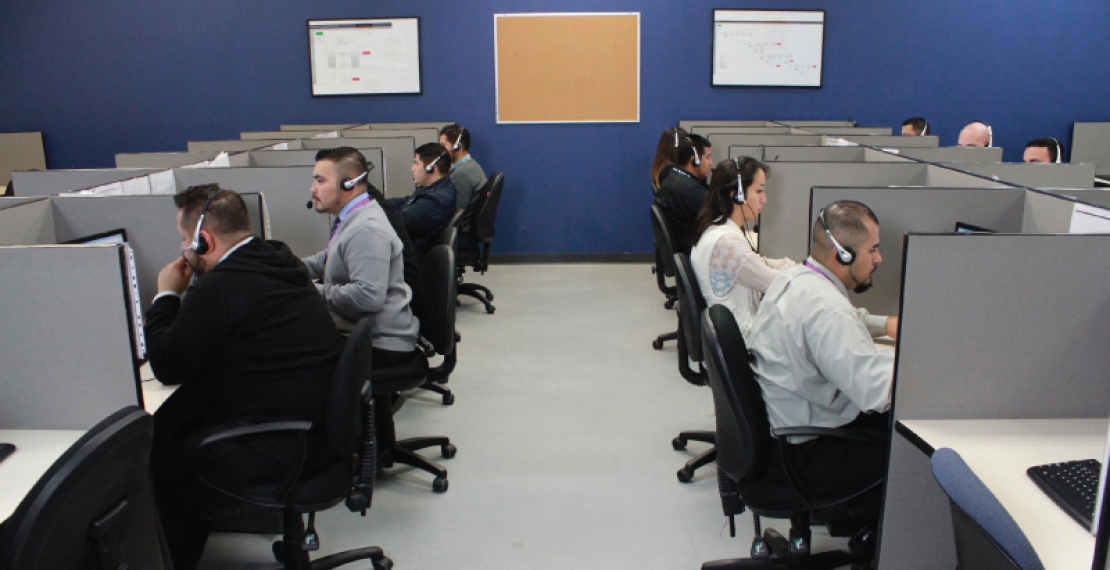
In December 2017, FCR announced a partnership with Call Center Services International (CCSI) to establish a new nearshore contact center operation in Tijuana, Baja California, Mexico. The expansion was designed to complement FCR's U.S. operations with bilingual and Spanish-language capacity while maintaining its existing systems, processes, performance standards, and company culture.
In 2017, FCR, a U.S.-based provider of outsourced customer support and business process services, announced plans to establish a new nearshore contact center with Call Center Services International in Baja California, Mexico.
The operation was planned for CCSI's Otay facility in Tijuana, strategically located near the U.S.-Mexico border and the San Diego metropolitan area.
At the time of the announcement, FCR planned an April 2018 grand opening with an initial team of approximately 30 to 50 full-time employees and anticipated the potential to expand the Baja workforce to more than 300 employees over time.
The purpose of the expansion was to complement FCR's U.S.-based operations with additional bilingual and Spanish-language service capabilities for existing and future clients.
Tijuana's geographic position remains one of the key reasons companies consider nearshore contact center operations in Tijuana. Proximity to Southern California allows management teams to remain closely connected to the operation while gaining access to Mexico's bilingual and bicultural workforce.
A central element of the FCR expansion was that the Tijuana center would operate as an extension of the company's existing U.S. organization rather than as a disconnected outsourced operation.
CCSI's role was to establish and support the local operating environment while FCR maintained control over its customer service model.
The Tijuana operation was designed to mirror FCR's existing:
FCR's management team would maintain operational control of the Tijuana location while working closely with dedicated supervisors, team leads, and agents in Mexico.
Cross-border training and communication between U.S. management and the Tijuana team were also important parts of the model.
The objective was not simply to add lower-cost capacity in another country. FCR wanted the Mexico team to operate according to the same standards, culture, systems, and expectations as its existing U.S. operations.
That approach continues to represent one of the primary advantages of CCSI's nearshore model: clients can expand into Mexico without giving up control over the way their operation is managed.
Matthew Achak, Co-Founder of FCR at the time, described the Tijuana expansion as a response to growing client demand for bilingual and Spanish-language support.
“We are very excited about our newest expansion in Tijuana,” said Matthew Achak, Co-Founder of FCR. “Our clients have been asking us for a solution such as this for years now, and we believe this nearshore solution will provide us the ability to offer our clients more service offerings for their Spanish language and bilingual needs. Our clients and the industries they represent are ever changing and increasingly more global. We see this as an enhancement to our existing English language operations in the U.S. and as an opportunity to expand our services to a much wider audience as well. We will always continue to grow our domestic sites in the United States, however now we have the nearshore operations to complement our clients’ needs for Spanish language and bilingual services as well.”
Katheryn Carnahan, who served as President of FCR at the time, emphasized that maintaining consistency between the U.S. and Mexico teams was an important part of the expansion strategy.
“It’s important for us to maintain consistency for our clients and to ensure they continue to receive the same great service they’ve come to expect from us. We’re committed to creating nearshore operations that are not only fully integrated with our operations and infrastructure in the U.S., but also one that matches our culture and values as well. As with all of our current domestic centers, FCR wants our colleagues in Tijuana to feel as if they are just as much a part of the FCR community and culture as our colleagues in Oregon and Montana. We’re really excited about this next chapter in the FCR story.”
The FCR expansion provides a strong historical example of what nearshoring can look like when the Mexico operation is intentionally designed as an extension of the U.S. organization.
Instead of creating an entirely separate customer service environment, FCR planned to bring its existing processes, management practices, technology, compliance requirements, and company culture into the Tijuana center.
CCSI provided the local infrastructure and resources necessary to establish the operation while allowing FCR to remain closely involved in day-to-day management.
A similar approach can allow U.S. organizations to combine:
CCSI's current Turnkey Nearshore Contact Center Program follows this same fundamental principle: clients retain control over their processes, quality standards, training, technology, and day-to-day business operations while CCSI manages the local infrastructure and operational framework in Mexico.
FCR, originally known as First Call Resolution, was founded in 2005 and developed customer experience and outsourced support solutions for growing and digitally focused companies.
The company information and operating statistics described in this article — including more than 60 clients, approximately 1,600 employees, seven contact center facilities, and operations in Oregon and Montana — reflect FCR as it existed at the time of the 2017 announcement.
FCR was acquired by TTEC in 2019 and was subsequently integrated into the TTEC organization. The former FCR business is now known as TTEC Agility.
Visit TTEC Agility for current information about the former FCR business.
The value of this 2017 announcement extends beyond the launch of one contact center.
It demonstrates how an established U.S. BPO provider could use CCSI's infrastructure in Mexico to expand bilingual capabilities while preserving its own operational standards, management structure, technology, processes, and employee culture.
A successful nearshore operation should feel like an extension of the existing organization, not a separate company serving the same customers.
Today, CCSI continues to support this approach through operations in Tijuana, Mexico City, and Guadalajara, giving U.S. organizations access to bilingual talent and local infrastructure while allowing them to maintain control over their customer experience.
Call Center Services International (CCSI) helps U.S. companies establish and manage high-performance bilingual nearshore contact centers in Mexico.
CCSI provides bilingual and bicultural talent, professional facilities, recruiting, Human Resources, enterprise IT infrastructure, Quality Assurance, Workforce Management, administrative support, and local operational resources.
Clients can integrate their existing systems, processes, training, quality standards, and technology into their Mexico operation while maintaining direct control over the customer experience and day-to-day business requirements.
Explore CCSI's Turnkey Nearshore Contact Center Program
Historical note: This article documents the partnership announced between FCR and Call Center Services International in December 2017. FCR leadership titles, employee counts, client counts, facility locations, planned staffing levels, and expansion expectations reflect the companies and plans as they existed at that time. FCR was later acquired by TTEC and the former FCR business is now known as TTEC Agility. The original leadership statements have been preserved as part of the historical record.
Originally published: December 13, 2017
Last reviewed and updated: July 26, 2026



The latest industry insights & news from CCSI, Specialists in Establishing Contact Centers in Mexico for Debt Collection, Customer Service, Sales, BPO and more.