

NEWS & INSIGHTS
The latest industry insights & news from CCSI, Specialists in Establishing Contact Centers in Mexico for Debt Collection, Customer Service, Sales, BPO and more.

NEWS & INSIGHTS
The latest industry insights & news from CCSI, Specialists in Establishing Contact Centers in Mexico for Debt Collection, Customer Service, Sales, BPO and more.
In our article Call Center Attrition: Main Reasons That Can Cause It, we reviewed some of the principal factors that can contribute to employee turnover in Contact Centers. Understanding why agents leave is the first step. The next is developing practical strategies that improve the employee experience and help organizations retain experienced talent.
Reducing attrition does not depend on a single initiative. Recruiting the right people, creating a supportive work environment, providing effective training, recognizing performance, and learning from employees who leave can all contribute to a stronger retention strategy.
Start by identifying the characteristics, skills, experience, and behaviors that best fit the positions within your Contact Center. A clear agent profile can help recruiting teams identify candidates who are better aligned with the responsibilities of the role and with your company's values and culture.
Job descriptions should also be reviewed regularly so that they accurately communicate responsibilities, qualifications, expectations, schedules, and the skills required for the position.
A structured interview and selection process can help determine whether candidates have the communication skills, experience, attitude, and capabilities required for the operation.
For organizations expanding their workforce, establishing clearly defined requirements is also important when working with a provider responsible for recruiting and selecting Contact Center agents.
A strong company culture can contribute to greater employee engagement and create a clearer framework for how agents communicate, collaborate, and work toward common objectives.
Company culture is not simply about employees working together to achieve performance goals. It also involves creating an environment where people feel respected, supported, recognized, and able to develop professionally.
Career development, communication, recognition, employee well-being, and opportunities for growth can all influence how employees perceive their long-term future within an organization.
A clearly defined company culture can also help organizations attract candidates whose expectations and values are compatible with the workplace they are joining.
Agents are more likely to feel confident in their roles when they receive the knowledge, tools, and support required to perform their responsibilities successfully.
A well-developed onboarding and training program should prepare employees to use the necessary systems, understand company procedures, communicate effectively with customers, and meet the performance expectations associated with their positions.
Training should also continue after onboarding. Ongoing development can help agents strengthen customer service, communication, technology, product knowledge, negotiation, leadership, and other skills relevant to their work.
Continuous development benefits both sides of the Contact Center: agents gain greater confidence and professional capabilities while customers interact with employees who are better prepared to assist them.
Recognition matters, and it does not always need to involve an expensive incentive program. Positive feedback from supervisors, managers, and company leaders can help employees understand that their work and progress are being noticed.
Recognizing successful behaviors also reinforces the actions an organization wants employees to continue. Rather than communicating only when something goes wrong, managers should also acknowledge improvements, accomplishments, and examples of strong performance.
Depending on company policy and the operation, recognition may include financial incentives such as performance bonuses or gift cards, as well as non-monetary recognition, scheduling preferences, additional time off, employee awards, or other appropriate benefits.
Recognition works best when expectations are clear and rewards are applied consistently and fairly. It should form part of a broader agent engagement strategy rather than being treated as an isolated initiative.
Employees leaving the organization can provide valuable information about their workplace experience. An exit interview gives employers an opportunity to better understand what influenced an employee's decision to leave and what aspects of the experience could potentially be improved.
Ask appropriate questions about management, workload, schedules, training, technology, compensation, career opportunities, work environment, and other factors that may have influenced the employee's experience.
Collecting the information is only the first step. Feedback should be organized, reviewed for recurring themes, shared with the appropriate leadership teams, and used where appropriate to improve the experience for existing employees and future hires.
Exit interview information can also complement other workforce indicators such as attendance, employee feedback, internal promotions, engagement, and Workforce Management data.
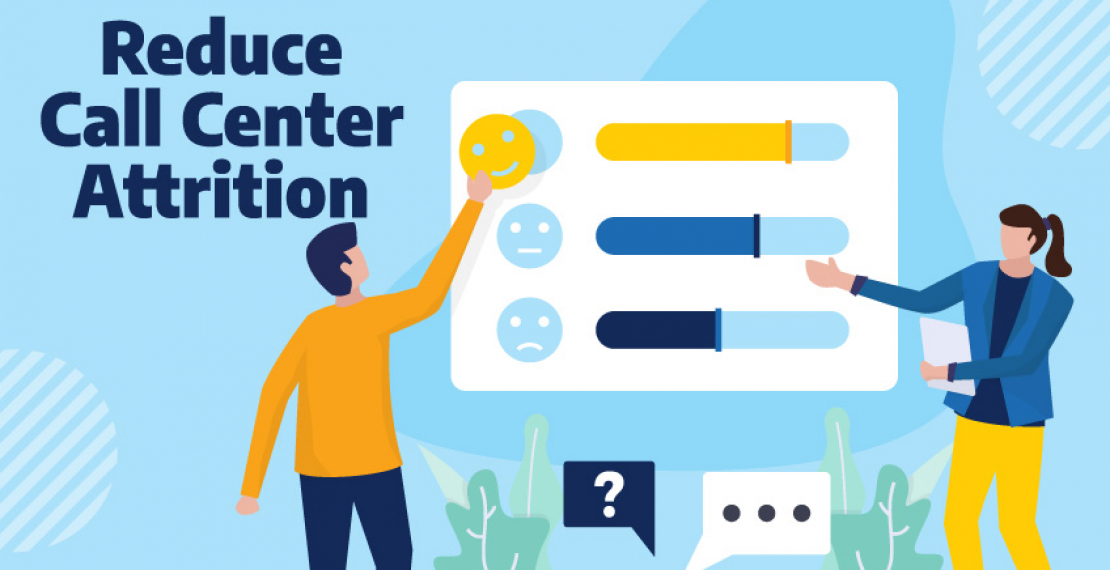
The following infographic accompanied the original 2022 article and summarizes the five practices discussed above for helping Contact Centers address employee attrition.
Once you have identified the possible causes of attrition within your operation, the next step is to determine which actions address those issues most effectively.
Recruiting employees who fit the role, creating a supportive culture, investing in training, recognizing performance, and listening to employees who leave can provide Contact Center leaders with a stronger foundation for improving retention.
These efforts also connect with the broader employee experience. When organizations understand what agents need to perform successfully and remain engaged, they can build more stable teams and provide greater continuity for customers.
Call Center Services International (CCSI) helps U.S. organizations establish and manage Nearshore Contact Center operations in Mexico. CCSI combines professional bilingual and bicultural agents with recruiting, training, Workforce Management, technology infrastructure, and operational support.
CCSI's people-focused company culture emphasizes work environment, recognition, professional development, and internal growth. These areas support employee engagement and the development of experienced teams for client operations.
Organizations looking to expand their workforce can use CCSI's Nearshore model to access recruiting capabilities, professional Contact Center infrastructure, employee development programs, and flexible operational support while maintaining close alignment with their U.S. operations.
Historical note: First published in June 2022, this article has been reviewed and updated while preserving its original five-part approach to reducing Contact Center attrition: identifying the right agent profile, building a strong company culture, providing effective training, recognizing good performance, and learning from exit interviews. The original infographic has also been retained, while language and internal resources have been updated for clarity and continued relevance.
Originally published: June 14, 2022
Last reviewed and updated: July 26, 2026



The latest industry insights & news from CCSI, Specialists in Establishing Contact Centers in Mexico for Debt Collection, Customer Service, Sales, BPO and more.