

NEWS & INSIGHTS
The latest industry insights & news from CCSI, Specialists in Establishing Contact Centers in Mexico for Debt Collection, Customer Service, Sales, BPO and more.

NEWS & INSIGHTS
The latest industry insights & news from CCSI, Specialists in Establishing Contact Centers in Mexico for Debt Collection, Customer Service, Sales, BPO and more.
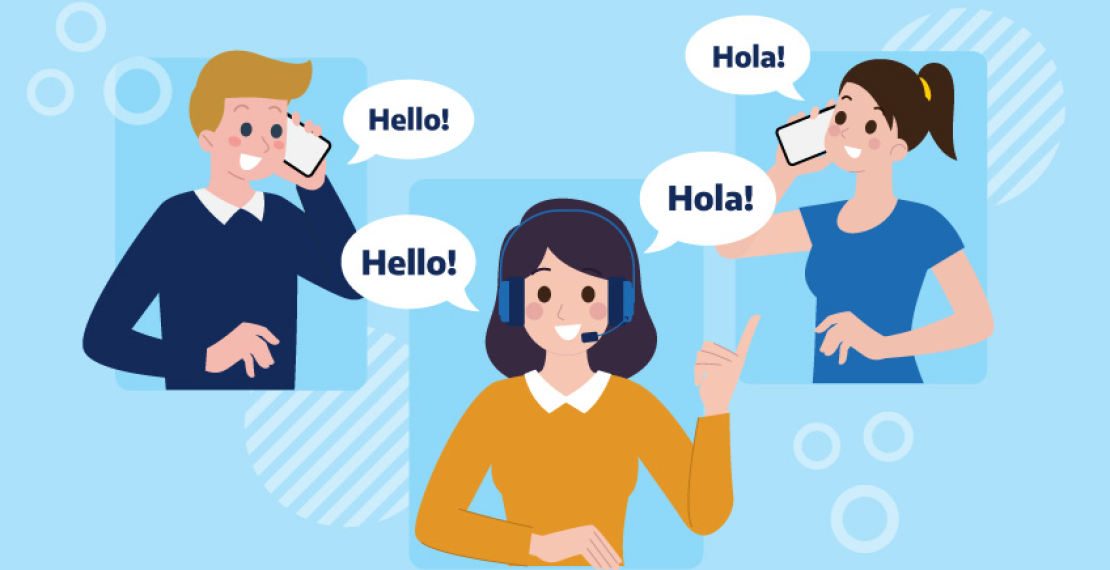
A bilingual workforce can provide an important advantage for U.S. Contact Centers serving increasingly diverse customer populations. English-Spanish bilingual agents can help organizations expand customer access, communicate with customers in their preferred language, reduce unnecessary language transfers, and create more flexible Customer Service operations.
Language remains an important Customer Experience consideration. According to the U.S. Census Bureau's 2024 American Community Survey, approximately 74 million people age five and older in the United States speak a language other than English at home, including nearly 45 million people who speak Spanish.
That does not mean every Spanish-speaking customer wants to conduct every interaction in Spanish. It does mean that organizations serving large and diverse U.S. markets should consider whether their customers would benefit from having the option to communicate in either English or Spanish.
Spanish is by far the most widely spoken language in the United States after English, creating a significant market for organizations capable of providing professional service in both languages.
Providing bilingual Customer Service can make it easier for customers to ask questions, place orders, schedule appointments, resolve account issues, make payments, or request assistance in the language they are most comfortable using.
The value can be particularly significant in markets with large Spanish-speaking populations and for national organizations serving customers across multiple states.
A bilingual Contact Center gives organizations the flexibility to support English- and Spanish-speaking customers without assuming that every customer has the same language preference.
Customer Service interactions can become more difficult when customers and representatives do not communicate comfortably in the same language.
Complex issues, technical explanations, financial information, healthcare questions, complaints, and emotionally sensitive conversations can be particularly vulnerable to misunderstanding when language becomes an additional barrier.
Providing access to agents who can communicate professionally in the customer's preferred language can make conversations easier to understand and help customers explain their needs more clearly.
Bilingual agents may also reduce the need to transfer customers between separate English- and Spanish-language teams. When the same agent has the skills and authorization required to continue the interaction, fewer language-related transfers may support metrics such as First Contact Resolution.
Language capability alone does not guarantee Customer Satisfaction. Agents still need appropriate training, product knowledge, communication skills, empathy, systems access, and authority to resolve the customer's issue.
Expanding language accessibility may also create additional business opportunities by making it easier for more customers to interact with the organization.
For operations involving Sales, Lead Generation, Customer Service, Loan Servicing, Debt Collection, appointment scheduling, or other customer-facing processes, clear communication can be an important part of building trust and moving an interaction toward its intended outcome.
For example, a prospective customer who can comfortably ask detailed questions about a product or service may be better positioned to make an informed purchasing decision. Similarly, a customer discussing an account or payment issue may be better able to understand available options when communication is clear.
However, bilingual capability should not be presented as a guarantee of higher sales, collections, or revenue. Conversion and business performance depend on many factors, including the product, offer, agent skills, processes, customer needs, pricing, and quality of the overall interaction.
The advantage is that bilingual service can remove a potential communication barrier and provide organizations with access to a broader range of customers.
Bilingual agents can also provide greater flexibility in how Contact Center work is distributed.
Instead of maintaining completely separate English- and Spanish-only teams, an organization may be able to use qualified bilingual agents across both language queues, depending on call volume, routing, skills, and customer demand.
This skills-based flexibility can help Workforce Management teams allocate resources more efficiently, particularly when demand changes throughout the day or when one language queue experiences an unexpected increase in volume.
Bilingual employees also routinely switch between languages, but this should not be interpreted to mean that bilingual people are universally better at multitasking than monolingual employees. Research into broader cognitive advantages from bilingualism has produced mixed results, and individual Contact Center performance should be evaluated based on actual skills and job requirements.
The practical Contact Center advantage is straightforward: an employee qualified to professionally support customers in two languages provides an additional operational capability that a single-language employee does not.
Adding bilingual agents to a Contact Center can improve language accessibility and provide additional workforce flexibility, but building a large bilingual team domestically may be challenging in markets where qualified English-Spanish talent is limited or highly competitive.
This is one reason organizations evaluate Nearshore Contact Centers in Mexico.
Mexico provides access to a large bilingual and bicultural workforce with geographic proximity to the United States and substantial overlap with U.S. business hours. These characteristics can make it possible to expand bilingual Customer Service while keeping the Nearshore operation closely connected with U.S.-based management teams.
CCSI's bilingual and bicultural Contact Center agents support U.S. organizations across Customer Service, Debt Collection, Loan Servicing, Sales, Lead Generation, Technical Support, Healthcare, and other customer-facing and back-office functions.
Nearshore Mexico can also provide a labor and operating cost advantage compared with equivalent U.S.-based Contact Center staffing. Depending on the program and operating requirements, CCSI currently estimates potential savings of up to 50%.
The objective should not simply be to find lower-cost bilingual labor. Organizations should evaluate language proficiency, communication skills, cultural familiarity, industry experience, training, technology, Quality Assurance, management, security, and the ability of the Nearshore team to integrate with the existing U.S. operation.
A bilingual Contact Center strategy should ultimately be based on the customers an organization serves.
Review customer demographics, interaction volumes, language preferences, transfer rates, Customer Satisfaction, First Contact Resolution, and the types of conversations your agents handle.
Some organizations may require extensive Spanish-language coverage. Others may need a smaller group of bilingual agents available during specific hours or for particular customer segments.
The important objective is to give customers appropriate access to assistance while designing a workforce model that makes operational and financial sense for the business.
Call Center Services International (CCSI) helps U.S. organizations establish and manage Nearshore Contact Center operations in Mexico, providing access to professional English-Spanish bilingual and bicultural talent together with recruiting, training, Workforce Management, technology infrastructure, and operational support.
CCSI's bilingual Contact Center agents support North American customers across multiple industries and business functions while operating as an extension of the client's existing team, processes, technology, and Customer Experience standards.
With operations in Tijuana, Mexico City, and Guadalajara, CCSI provides organizations with access to scalable bilingual workforce capacity, geographic proximity to the United States, and potential labor and operating cost savings of up to 50% compared with equivalent U.S.-based Contact Center operations.
Historical note: First published in March 2024, this article has been reviewed and updated while preserving its original focus on the business value of an English-Spanish bilingual Contact Center workforce. Older demographic projections and generalized claims about bilingual employees being inherently better at multitasking have been replaced with current U.S. Census language data and a more precise explanation of the operational flexibility bilingual agents can provide.
Originally published: March 13, 2024
Last reviewed and updated: July 25, 2026



The latest industry insights & news from CCSI, Specialists in Establishing Contact Centers in Mexico for Debt Collection, Customer Service, Sales, BPO and more.