

NEWS & INSIGHTS
The latest industry insights & news from CCSI, Specialists in Establishing Contact Centers in Mexico for Debt Collection, Customer Service, Sales, BPO and more.

NEWS & INSIGHTS
The latest industry insights & news from CCSI, Specialists in Establishing Contact Centers in Mexico for Debt Collection, Customer Service, Sales, BPO and more.
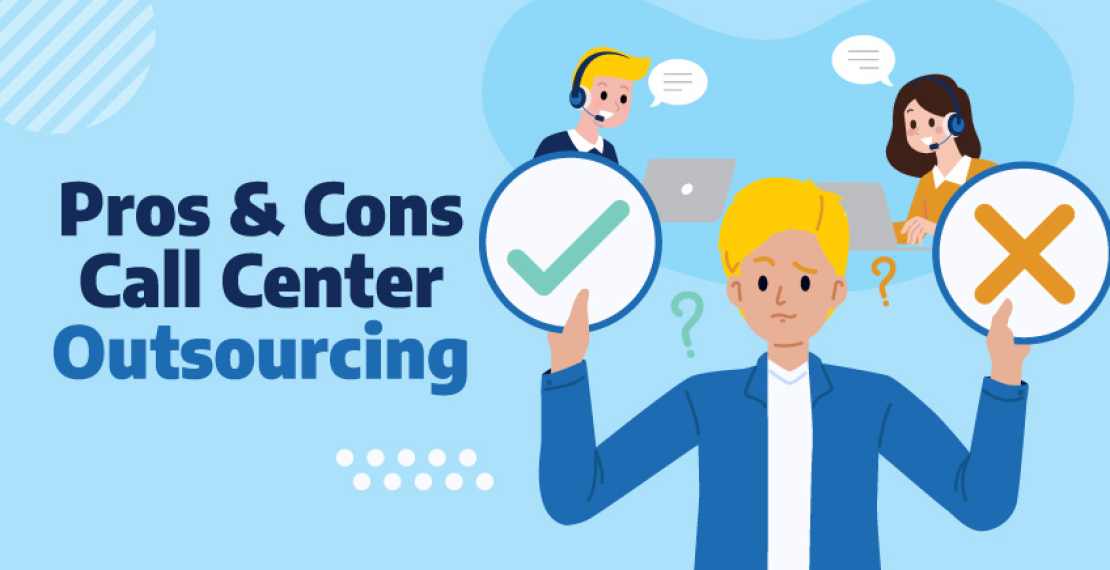
If you're considering outsourcing your Customer Service or Contact Center operation, there are several factors to evaluate before making a decision. Outsourcing can provide meaningful advantages in cost, workforce capacity, recruiting, language capabilities, and scalability, but it can also introduce challenges related to communication, quality, security, management, and unexpected costs. Understanding both sides can help you determine whether outsourcing is the right fit for your business.
The decision to outsource can create mixed expectations. On one hand, organizations may be concerned about moving important customer interactions outside their internal operation. On the other, outsourcing can provide opportunities to reduce costs, increase workforce capacity, access specialized expertise, and improve scalability.
The right decision depends on your business objectives, customer requirements, operational model, and the capabilities of the provider you select. Contact Center outsourcing companies can offer significantly different service levels, workforce models, pricing structures, technology, and degrees of operational control.
One of the most common reasons organizations consider outsourcing is the opportunity to reduce operating costs.
Cost advantages may result from lower labor and overhead expenses in the outsourcing location, economies of scale, established infrastructure, recruiting efficiencies, or a business model designed specifically for Contact Center operations.
For example, Nearshore operations in Mexico can provide significant labor and operating cost savings compared with equivalent U.S.-based Contact Center operations.
Tip: Do not compare providers based only on an hourly rate. Review exactly what the price includes and compare it with the fully loaded cost of maintaining the same operation internally.
Recruiting and retaining qualified Contact Center employees can require significant time and resources. Outsourcing providers specialize in workforce recruitment and may provide access to recruiting teams, candidate pipelines, training resources, and established labor markets.
This can make it easier to expand an operation or respond to increases in customer demand without requiring the internal organization to manage every recruiting and administrative function independently.
However, outsourcing does not eliminate staffing challenges completely. Recruiting quality, employee retention, compensation, training, management, and company culture still influence the stability and performance of the workforce.
Tip: Ask potential providers about recruiting capacity, turnover, training, retention practices, workforce availability, and how staffing commitments will be reflected in the Service Level Agreement (SLA).
Nearshore and offshore Contact Center locations may provide access to large pools of employees with Customer Service, Financial Services, Sales, Technical Support, Debt Collection, and other relevant experience.
A larger recruitment pool can make it easier to search for candidates with the communication abilities, industry experience, technical knowledge, language skills, and behavioral characteristics required by a specific program.
Locations such as Mexico also provide access to significant English-Spanish bilingual talent, which can be particularly valuable for companies serving customers throughout the United States.
Tip: Evaluate the actual labor market available to the provider, including language skills, education, relevant industries, recruiting capacity, and the experience required for your program.
Expanding workforce capacity can help organizations improve customer accessibility when staffing levels are one of the causes of long wait times or delayed responses.
An outsourcing partner may provide additional agents for phone, email, chat, or other communication channels, allowing the organization to increase coverage during normal operations, seasonal peaks, or periods of rapid growth.
However, additional headcount does not automatically guarantee faster service. Accurate forecasting, scheduling, training, systems, processes, routing, and Workforce Management must also be aligned with customer demand.
Tip: Estimate the number of agents required and define measurable service-level objectives before selecting an outsourcing provider.
Outsourcing can also provide access to employees who communicate professionally in multiple languages.
Nearshore destinations such as Mexico provide access to professional English-Spanish bilingual agents who can support organizations serving both English- and Spanish-speaking customers.
Bilingual capability can provide additional flexibility in staffing and may help organizations serve a broader customer base without maintaining completely separate teams for each language.
Tip: Review your customer demographics and determine which language capabilities provide meaningful value to your operation.
Language and cultural differences can create communication challenges when the workforce is not sufficiently prepared for the customers it serves.
The important consideration is not whether the agent is located in another country, but whether the agent has the communication skills, language proficiency, training, cultural familiarity, and product knowledge required for the role.
Misunderstanding terminology, customer expectations, industry-specific language, or conversational context can affect the quality of an interaction regardless of where the agent is located.
Tip: Include language and communication requirements in your vendor evaluation. When appropriate, meet agents or listen to sample interactions before selecting the provider.
Outsourcing can affect customer satisfaction when service quality, communication, training, processes, or performance expectations are not properly managed.
Customers generally care about receiving accurate information, being understood, resolving their issue efficiently, and interacting with someone who represents the brand professionally.
Problems can arise when agents lack sufficient product knowledge, communication skills, authority, systems access, training, or understanding of the customer's situation.
These risks can be reduced through careful recruiting, continuous training, clearly defined standards, performance monitoring, and an effective Quality Assurance and Call Monitoring program.
Tip: Define customer-experience and Quality Assurance expectations before implementation and make sure you have access to meaningful performance reporting.
A common outsourcing mistake is comparing providers only by their quoted hourly rate.
Depending on the arrangement, organizations may also need to consider travel, internal management resources, training, software licenses, technology integration, specialized equipment, incentives, implementation costs, and the time required for a new team to reach expected performance.
Some of these expenses may already be included in the provider's pricing, while others may remain the client's responsibility.
Tip: Review the contract and pricing structure carefully. Identify what is included, what is optional, what requires additional investment, and what internal expenses your organization will continue to carry.
Outsourcing may require agents to access customer information, business applications, payment data, protected health information, or other sensitive resources.
Organizations should therefore understand how the provider manages information security, identity and access, employee onboarding, network security, endpoint protection, physical security, monitoring, incident response, and applicable compliance requirements.
Relevant frameworks may include SOC 2, ISO/IEC 27001, PCI DSS, HIPAA requirements, or other standards depending on the industry and information involved.
Tip: Include specific cybersecurity and compliance requirements in your RFP and request evidence appropriate to the needs of your operation rather than relying solely on general statements about security.
Organizations sometimes worry that outsourcing means losing visibility or control over their Contact Center operation.
That risk depends heavily on the outsourcing model. Long time-zone differences, limited reporting, weak communication, unclear responsibilities, or insufficient client involvement can make it more difficult to address problems quickly.
Quality can also suffer when there is no structured process for monitoring interactions, coaching agents, measuring KPIs, reviewing customer feedback, and communicating results between the client and provider.
However, outsourcing does not inherently require giving up operational control. Some models allow clients to remain directly involved in procedures, training, systems, performance objectives, Quality Assurance, and management decisions.
Tip: Ask potential providers what reporting is available, how frequently performance is reviewed, who controls procedures and training, and what level of client involvement is supported.
Outsourcing can provide significant advantages when the right provider and operating model are selected. It can help organizations reduce costs, expand workforce capacity, recruit specialized talent, add language capabilities, and support business growth.
However, outsourcing should not be viewed as an automatic solution. The quality of the outcome depends on due diligence, provider selection, implementation, workforce quality, training, technology, communication, security, Quality Assurance, and ongoing management.
Before making a decision, define what your organization is trying to accomplish and compare providers against those objectives. Cost matters, but customer experience, security, scalability, workforce quality, operational control, and long-term partnership should also be part of the evaluation.
An on-site visit can also provide valuable insight into the workforce, management team, infrastructure, security, technology, and overall environment of a prospective outsourcing partner.
Call Center Services International (CCSI) helps U.S. organizations establish and manage Nearshore Contact Center operations in Mexico. CCSI combines professional bilingual and bicultural agents with recruiting, Human Resources, facilities, technology, Workforce Management, training, and operational support.
CCSI's current Nearshore programs allow clients to maintain direct involvement in their procedures, systems, training, agents, and performance objectives while CCSI manages the local infrastructure and administrative requirements in Mexico. Depending on the program, organizations can also achieve labor and operating cost savings of up to 50% compared with U.S.-based Contact Center operations.
For organizations handling sensitive customer information, CCSI also maintains a cybersecurity and compliance framework that includes SOC 2, ISO/IEC 27001, PCI DSS, and HIPAA compliance.
Historical note: First published in August 2023, this article has been reviewed and updated while preserving its original framework of five advantages and five potential disadvantages of Contact Center outsourcing. Statements that originally presented staffing improvements, faster response times, lower turnover, customer dissatisfaction, or loss of operational control as automatic results of outsourcing have been refined to reflect that outcomes depend on the provider, workforce, management model, technology, training, security, and requirements of each individual operation.
Originally published: August 16, 2023
Last reviewed and updated: July 25, 2026



The latest industry insights & news from CCSI, Specialists in Establishing Contact Centers in Mexico for Debt Collection, Customer Service, Sales, BPO and more.